Celebrating Freedom Day: Reflecting on Democracy in South Africa and Africa
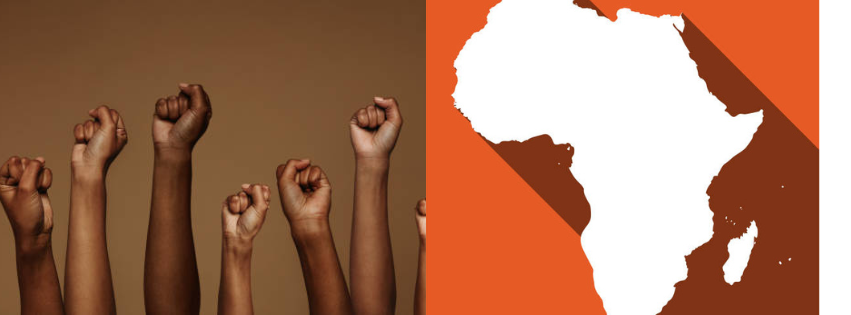
The fight for “True” democracy continues across the African continent, Image credit: Stock & Getty Images, Photos by: Jacob Lund and A. Mokhtari.
Published by: Rorisang Masenya
Tomorrow, South Africa commemorates Freedom Day, a day to honour the long journey towards a democratic nation and the freedoms it guarantees. But Freedom Day also presents an opportunity to examine the state of democracy across Africa.
Democracy in Africa: A Varied Landscape
Democracy is a multifaceted system, and there’s no single perfect model. However, there are widely accepted benchmarks, including free and fair elections, equal rights, and the rule of law.
According to the Democracy Index, which ranks nations based on these benchmarks, Mauritius, Botswana, and Cabo Verde are Africa’s leading democracies. These countries have a consistent history of free and fair elections, with strong civil liberties and active political participation.
Where Does South Africa Stand?
So, how does South Africa compare? South Africa ranks highly on the Democracy Index, at number 7. This is a cause for celebration. South Africa has a strong constitution, a vibrant civil society, and a relatively free press.
Room for Growth: Strengthening South Africa’s Democracy
There’s always space for improvement, however. Some challenges include:
- Economic Inequality: A strong democracy necessitates an engaged citizenry. However, if people are struggling financially, political participation may become a secondary concern.
- Combatting Corruption: Corruption undermines the rule of law and breeds public cynicism towards the government. South Africa must persist in its fight against corruption to rebuild trust in democratic institutions.
- Fortifying Political Institutions: Well-functioning democracies depend on robust institutions like an independent judiciary and an unfettered press. These institutions hold leaders accountable and safeguard the rights of all citizens.
A Complex History: African Democracy in Context
The current state of democracy in Africa cannot be fully understood without acknowledging the continent’s complex history. As scholar Robert Bates argues in his essay, ‘Democracy in Africa: A Very Short History‘, Africa’s colonial past left a legacy of weak political institutions and ethnic divisions. These factors can make it difficult to establish and maintain democratic systems.
“For much of history, Africa was a collection of chiefdoms, kingdoms, and empires, with little or no experience of democratic self-government”.
(Bates, 2015, p. 4)
This lack of historical experience with democracy can pose a challenge to building strong democratic institutions today.
Celebrating Progress, Committing to the Future
Freedom Day is a chance to acknowledge South Africa’s progress. It’s also a chance to recommit to building a more robust democracy, one that is inclusive, equitable, and just.
Let’s look towards the future with hope and resolve, drawing lessons from the experiences of other African nations and striving to make South Africa a beacon of democracy on the continent. By understanding the challenges and complexities of democracy in Africa, South Africa can work towards a brighter future for all its citizens.
About The Author