Bugatti Unveils 1800-Horsepower Tourbillon Hypercar, Successor to the Chiron
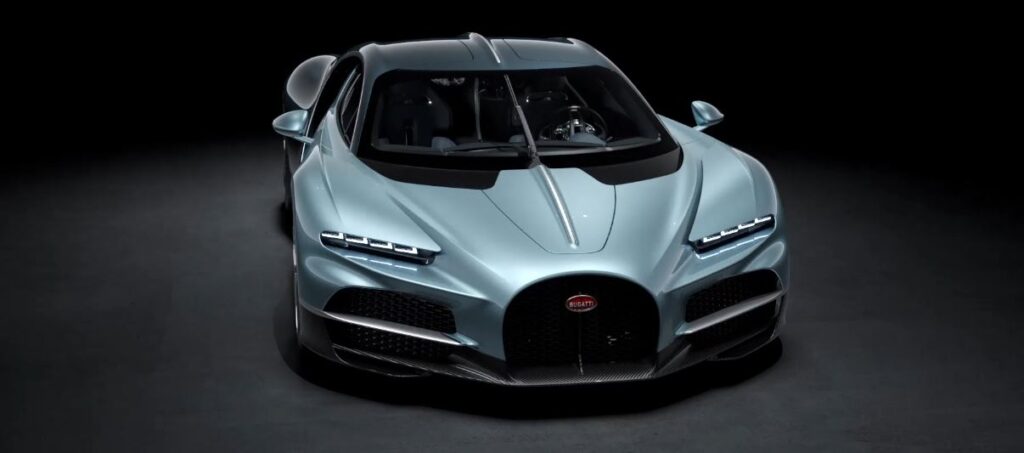
Image Source: via Bugatti
Published by Everything ZA News
French carmaker Bugatti has unveiled the successor to its iconic Chiron hypercar, the Bugatti Tourbillon. With only 250 units planned for production, the Tourbillon is set to be even more exclusive than its predecessor.
“The development of the Bugatti Tourbillon was guided at every step by the 115 years of Bugatti history,” said Mate Rimac, CEO of Bugatti. “The Tourbillon is all-new from the ground up, but retains the strong design language that has become synonymous with Bugatti.”
New Hybrid Powertrain
The biggest change for the Tourbillon comes under the hood. Bugatti has ditched the quad-turbocharged W16 engine of the Chiron in favor of a naturally-aspirated 8.3-liter V16 co-developed with Cosworth. This monstrous engine produces a staggering 736kW (1000hp) on its own, matching the original Bugatti Veyron that relied on four turbochargers for such power.
However, the Tourbillon isn’t just about internal combustion muscle. Bugatti has added a trio of electric motors to the powertrain, bringing total system output to a mind-blowing 1,800 horsepower. This allows for a purely electric driving range of 60 kilometers.
The performance figures are equally impressive. The Tourbillon can blast from 0 to 100 km/h in a scant 2.0 seconds, reaching 200 km/h in just 5 seconds. The 0-300 km/h sprint takes a mere 10 seconds, with a top speed exceeding 445 km/h.
Evolutionary Design
While the Tourbillon boasts a completely new powertrain and chassis, Bugatti has opted for an evolutionary design approach for the exterior.
“The creations of Ettore and Jean Bugatti are ingenious in their aerodynamics, innovation and enduring beauty,” said Frank Heyl, Bugatti director of design. “We draw inspiration from Bugatti’s rich heritage to create a car that looks fast even when standing still.”
The Tourbillon is expected to go on sale in 2026 with a starting price of around 3.8 billion euros (approximately R68 million).
About The Author