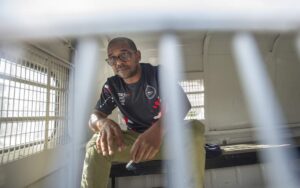
Mozambique’s Election in Crisis: EU Alleges Result Manipulation Amid Growing Unrest
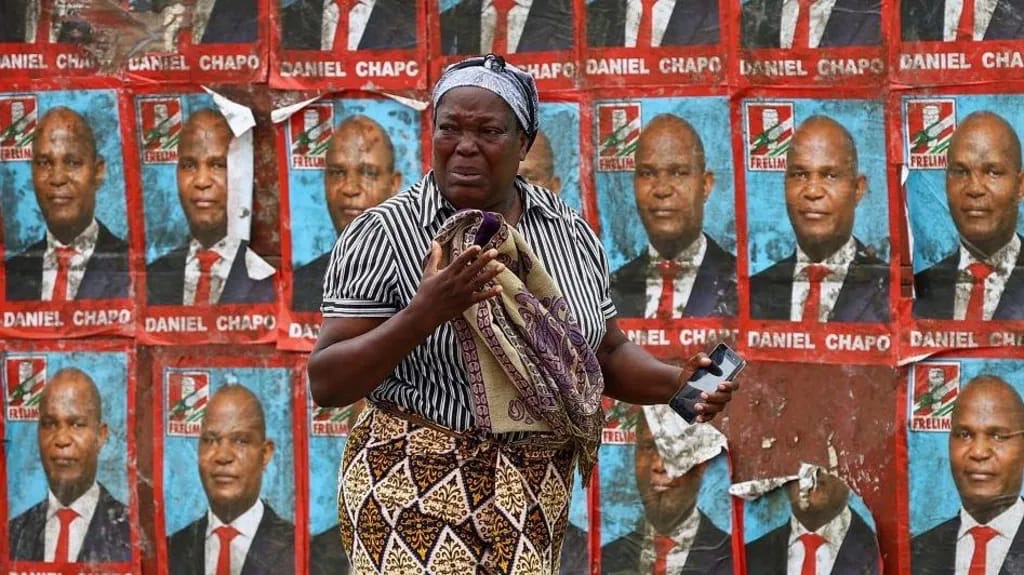
Image Source: Reuters
Election observers from the European Union (EU) have raised serious concerns over the integrity of Mozambique’s recent general election, claiming that voting results have been doctored. The allegations come as political unrest grips the nation, with thousands protesting against the government’s handling of the election.
The protests, which escalated on Monday, were led by independent presidential candidate Venâncio Mondlane, who is openly accusing the Mozambican security forces of politically motivated violence. He specifically blames them for the recent killing of his lawyer, Elvino Dias, and another political official, Paulo Guambe, both of whom were shot while in the same car last Friday. The security forces have denied any involvement.
Irregularities in the Election Process
The official results from the general election, which was held on October 9th, are expected to be announced by Friday. However, the EU observer mission has revealed alarming evidence of “irregularities during counting and unjustified alteration of election results at polling station and district levels.”
In a statement released on Tuesday, the EU called for the Mozambican electoral bodies to ensure transparency in the vote-tabulation process, urging them to make polling station results traceable and credible. This follows reports of widespread vote-buying, inflated voter rolls in strongholds of the ruling Frelimo party, and voter intimidation. These allegations were also supported by a US-based organization, the International Republican Institute, which sent its own multinational observer mission to the southern African nation.
Website Hacked, Transparency Undermined
Adding to the controversy, Mozambique’s national election results were intended to be published on the electoral commission’s official website, ensuring public access to the data. However, a cyber-attack on the website last month has left it inactive, and the commission has not yet restored it. This technological failure has further fueled doubts over the credibility of the election process.
Protests Intensify: Violence and Fatalities
Amid mounting tensions, Venâncio Mondlane, a 50-year-old presidential hopeful backed by the opposition party Podemos, has already declared himself the winner of the election. He claims that the killings of his aides were deliberate, aimed at disrupting his campaign and undermining the opposition’s chances.
“This was a crime committed by the defence and security forces. There’s no doubt about it,” Mondlane declared, insisting that special forces were responsible for the shooting of Dias. He has called for further protests, mobilizing his supporters across the country to demand justice for his slain aides and to contest what he sees as the fraudulent election.
On Monday, protests erupted in multiple cities, including Maputo, Beira, and Nampula. Demonstrators blocked roads with burning tires and makeshift barricades, while the police responded with tear gas, live rounds, armoured vehicles, and police dogs. Footage from the capital showed Mondlane and journalists fleeing after gunfire erupted near a protest site.
Local media reported at least 16 people were injured in the clashes, with some rushed to hospitals. Several arrests were made as authorities attempted to contain the demonstrations, which led to the temporary closure of businesses and shops across major cities. By Tuesday, however, most businesses had reopened, but the tension remains high, with more protests expected later in the week.
Calls for Accountability
The deaths of Dias and Guambe have provoked strong reactions from both domestic and international figures. Former Mozambican President Armando Guebuza, the United Nations, the United States, and the European Union have all condemned the killings, urging the Mozambican authorities to conduct a thorough investigation and hold the perpetrators accountable. Celebrated Mozambican author Mia Couto also weighed in, calling the deaths a “crime against the nation.”
As the unrest continues to grow, the eyes of the world are now focused on Mozambique. Many are waiting to see how the electoral commission will handle the allegations of vote tampering, and whether the country can avoid descending further into violence.
A New Political Era?
This election marks a significant turning point for Mozambique, as the country will soon have a new president. Current President Filipe Nyusi, who has served the constitutional two-term limit, will be stepping down. His successor will either be Daniel Chapo, the 47-year-old candidate from the ruling Frelimo party, or one of the opposition figures—Mondlane, Ossufo Momade from Renamo, or Lutero Simango from the Mozambique Democratic Movement.
For Mozambique, a nation that has been ruled by Frelimo since its independence from Portugal in 1975, this election could signal a critical moment of change. But with violence, accusations of corruption, and political unrest plaguing the process, the path forward remains uncertain. All eyes are now on the electoral commission’s announcement on Friday, as the country waits for clarity and justice in these turbulent times.
About The Author