Please Call Me’ Dispute: Makate vs. Vodacom Heads to South Africa’s Highest Court

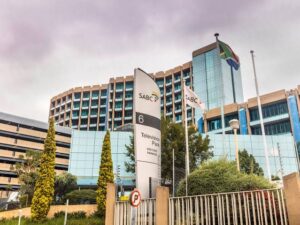
Image Source: Sharon Seretlo via SNL24
One of the most significant legal battles in South Africa’s telecommunications sector is set to be addressed at the Constitutional Court. Nkosana Makate, the innovator behind the widely-used Please Call Me (PCM) service, will be representing himself in this pivotal case against Vodacom, scheduled for Thursday, November 21. The core of the dispute revolves around Vodacom’s appeal against a ruling issued by the Supreme Court of Appeal (SCA), which rescinded a R47 million settlement offer that Vodacom’s CEO, Shameel Joosub, extended to Makate in 2019. Before this, the North Gauteng High Court had determined that Makate was entitled to more than 5% of the revenue that his invention generated for Vodacom.
Vodacom’s position in this legal matter is that its methodology for calculating compensation is consistent with standard practices typically seen in employer-employee relationships. They contend that this system was intentionally designed to govern how employees are rewarded for new product developments. However, the SCA has leveled criticism against Vodacom’s approach, stating that they are attempting to “unscramble the scrambled eggs,” indicating that the situation is complicated beyond simple resolution.
From Vodacom’s legal perspective, Makate’s claim stems from his assertion that he deserves a portion of “any revenue the company earns from PCM” for as long as the service remains operational. Their legal representatives clarified that the agreement made between Makate and Vodacom specifies that he is entitled to a fixed amount of compensation rather than ongoing royalties that would potentially last indefinitely.
During the proceedings, Vodacom’s lawyers pointed out that Joosub holds the authority to determine the compensation that should be due to Makate based on the stipulations outlined by the court. They argued that the court’s directive—indicating that if Vodacom and Makate cannot come to a mutual agreement, it falls to Joosub to set the amount—implies that the compensation awarded would be a one-time payment instead of a continuous royalty arrangement.
In striking contrast to the R47 million offer, which he ultimately rejected, Makate claims to be entitled to a staggering amount of around R28 billion. His journey began in 2007 when he first sent a letter of demand after presenting his groundbreaking idea for a service that would allow one individual to “buzz” another’s phone without incurring airtime charges. This innovative concept, initially introduced to a supervisor on November 21, 2000, transformed into what is now recognized as the Please Call Me service, launched on the Vodacom network in January 2001.
Moreover, Makate has reported to the Constitutional Court that data indicates approximately 38% of calls are answered within the first 24 hours following a PCM request. He asserts that his compensation model seeks only 5% of the revenue generated from calls that are returned in direct response to PCMs sent within the first hour of their transmission. Under this model, Vodacom would retain 95% of that revenue and, crucially, keep 100% of the revenue from calls made in response to PCMs beyond the initial hour. This detailed account of the case underscores the complexities and implications of intellectual property rights and compensation in South Africa’s dynamic telecommunications landscape.
About The Author