Ghanaian Designer Turns Textile Waste into Fashion Treasure
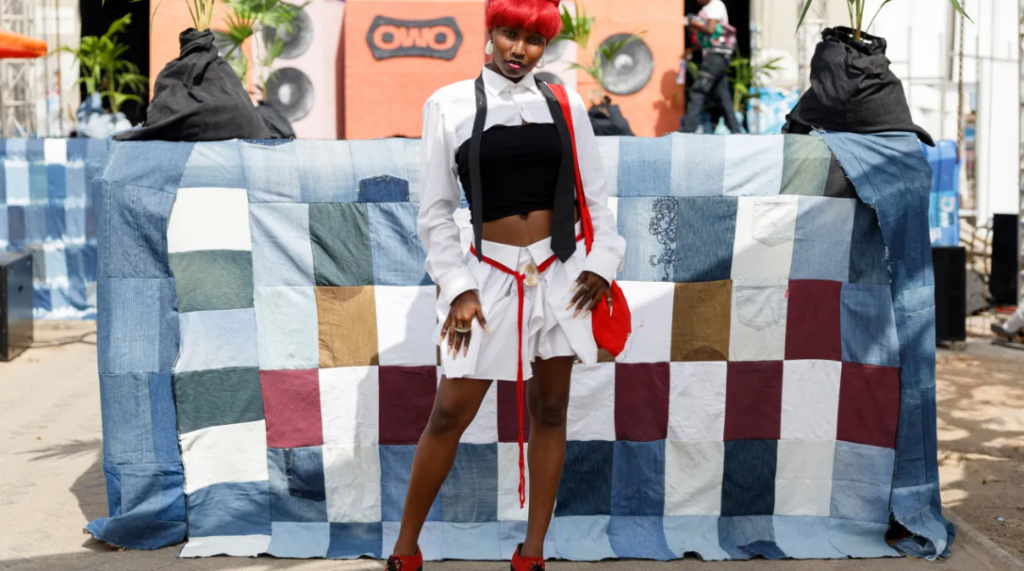
Image Source: A lady poses for a photograph during a thrift and an upcycle show in Accra, Ghana, Sunday, Oct. 27, 2024. (AP Photo/Misper Apawu)
Ghana is a significant importer of used clothing in Africa, with brands like Adidas, Reebok, and Aussiebum often found washed up on Jamestown Beach. Local fisherman Jonathan Abbey raises concerns about the impact of fast fashion on his livelihood, noting that textile waste frequently tangles in his fishing nets.
“While secondhand clothing is affordable, it creates problems for us. If no one buys these clothes, where do they end up? They’re not disposed of properly; instead of being burned, they are thrown into the Korle Lagoon, which flows into the ocean,” he explains.
Fast fashion refers to inexpensive, mass-produced clothing with a short lifespan, and its popularity has surged. McKinsey’s research shows that clothing production doubled between 2000 and 2014, with a 60% increase in the number of items bought per person.
The Or Foundation, a Ghanaian organization, explores alternatives to the current fashion model and examines the secondhand clothing market. Neesha Ann-Longdon from the Or Foundation notes that “of the 50 million garments arriving each week, nearly 40% will end up as waste.” She points out that, while the secondhand clothing market in Ghana provides jobs and creative opportunities, it has also led to an influx of “lower-quality products” in Accra’s Kantamanto market.
The Or Foundation’s Owo Festival, now in its third year, aims to raise awareness about fast fashion and promote the repurposing of clothing by showcasing upcycled fashion items crafted by locals. The event, held near the Kantamanto market, featured designers selling and displaying their upcycled creations on an improvised runway, often sourcing materials from Kantamanto.
Designer Richard Asante Palmer repurposes discarded textiles, turning shirt fabric into bags and seeking higher-quality fabrics for more durable clothing items. “Instead of letting this waste clog our drainage systems, wash up on our beaches, or fill landfills, I decided to repurpose it into items like pants or jackets, giving it new life,” he says.
About The Author