When Robert’s daughter reached the age of 18, she unlocked the right to claim a modest inheritance left to her by her great-grandmother. To secure the funds, she was required to visit the Master of the High Court in the Western Cape and formally make her claim.
After her application was turned down three times due to minor administrative errors such as typing the form instead of handwriting it, printing it across two pages rather than back-to-back, and a smudged police station number Robert’s daughter was hit with yet another setback. This time, the reason she couldn’t access her inheritance was entirely new.
“This week, Robert explained to Daily Maverick that they told her she couldn’t verify her identity without a smart ID card, so she’d need to visit Home Affairs to get one first.”
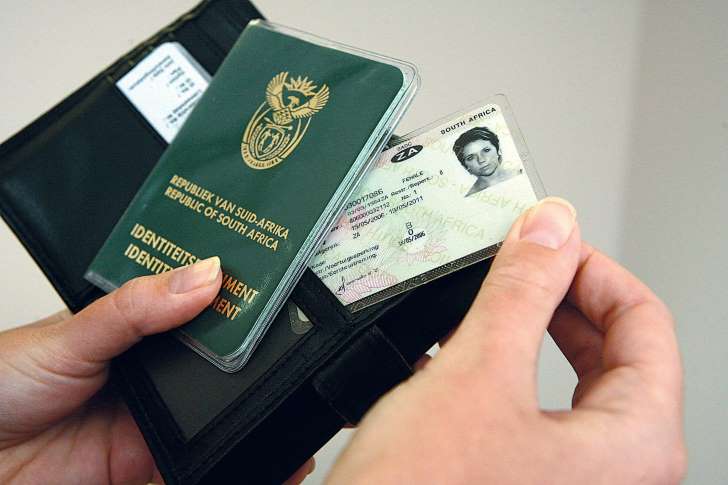
There was just one issue: Robert, a South African who spent 23 years in the UK before returning with his two children 11 years ago, has a daughter who is a permanent resident of South Africa, not a citizen. As a result, she is among the many naturalised South Africans (including this reporter) who are ineligible to apply for a smart ID card.
The official at the Master of the High Court office, however, stood firm in their decision: a green barcoded ID, the type still given to permanent residents and naturalised citizens, was not enough to establish identity for claiming an inheritance.
Robert likened his daughter’s predicament to a “Catch-22,” but it’s a challenge that millions of South Africans who weren’t born citizens are all too familiar with. Excluded from the smart ID program, which was rolled out in 2013, they now face the looming threat of their green barcoded IDs currently used for everything from identification to voting being phased out in the near future.
According to Pizzocri, CEO of the law firm Eisenberg & Associates, it’s unlikely that there was any “discriminatory intent” behind the issue. Instead, the limitations faced by permanent residents and naturalised citizens are probably a result of how the technology and systems were initially designed. In the early stages of the smart ID card rollout, the focus was exclusively on South African-born citizens, which likely led to these restrictions.
Schreiber acknowledged the public frustration, explaining that what seems like a straightforward fix—allowing naturalised citizens and permanent residents to get smart IDs is actually just a reflection of a much deeper problem within the department’s IT systems.
Schreiber revealed that the department aims to accomplish this goal by the end of 2025. The plan includes broadening Home Affairs’ reach by partnering with hundreds more bank branches to improve accessibility, along with implementing crucial IT upgrades that would allow naturalised citizens and permanent residents to finally obtain smart IDs for the first time.