Egyptian Officials Alarmed by Potential U.S. Aid Cuts Over Gaza Relocation Dispute
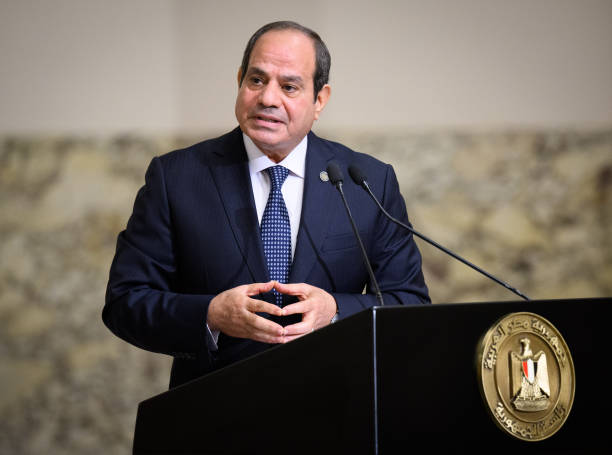
11 September 2024, Egypt, Kairo: Abdel Fattah Al-Sisi, President of Egypt, speaks at a press conference after his meeting with President Steinmeier at Ittihadiya Palace. Federal President Steinmeier is on a two-day visit to the Arab Republic of Egypt. Photo: Bernd von Jutrczenka/dpa (Photo by Bernd von Jutrczenka/picture alliance via Getty Images)
According to various sources within Egypt’s security system, President Abdel Fattah al-Sissi is likely to refuse any invitation to the White House if the discussion includes U.S. President Donald Trump’s contentious plan to relocate Palestinians from Gaza. This proposal has caused considerable outrage among many Arab nations, who consider it not only impractical but also deeply inhumane.
Trump’s plan involves placing Gaza under U.S. control and rebranding it as the “Riviera of the Middle East.” This idea has placed pressure on nearby countries, particularly Egypt and Jordan, to take in about 2 million residents from Gaza. Trump has even implied that failure to agree could result in significant reductions in U.S. aid. These direct threats have alarmed regional leaders, as the potential for large-scale population relocations could further destabilize an already delicate political situation.
Egyptian officials have noted that Trump had previously extended an open invitation for President al-Sissi to visit Washington, D.C. However, the U.S. government has not yet set a specific date for this anticipated meeting, leaving diplomatic relations uncertain. The urgency of these discussions has intensified following Trump’s recent conversation with King Abdullah II of Jordan, during which the Jordanian king strongly rejected the plan to forcibly move Gazans. He stressed the importance of resolving the issue in line with established international rights and humanitarian standards.
As these political tensions evolve, the regional situation remains unstable, especially concerning the fragile ceasefire between Israel and Hamas. Israeli officials have made it clear that military actions against Hamas will resume unless the hostages taken by the militant group are released immediately. The ongoing uncertainty not only complicates the already strained relationships among the involved parties but also casts a shadow over diplomatic efforts aimed at achieving regional stability. The humanitarian crisis in Gaza is poised to remain a significant and contentious topic in these critical discussions.
About The Author