Kakuma’s Road to Economic Independence: Breaking Barriers to Progress
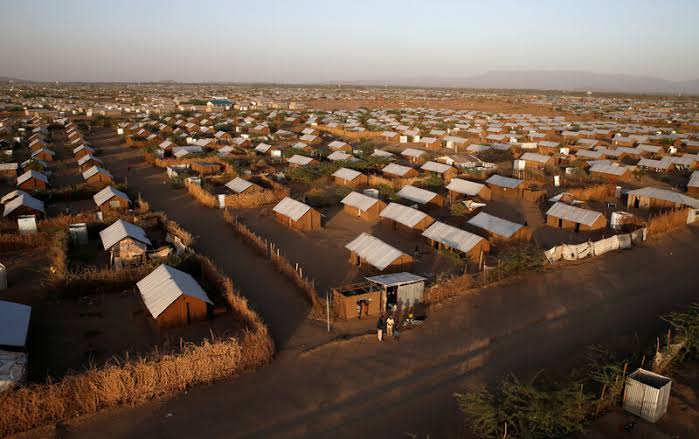
Image source: The World Economic Forum
Located in the remote and windswept cattle-rustling regions of northwest Kenya, Kakuma is a place far from the conveniences of urban life. Originally established in 1992 as a temporary refuge for individuals fleeing conflicts in South Sudan, Ethiopia, and the Democratic Republic of the Congo, the camp has evolved into one of Africa’s most significant refugee settlements due to unforeseen circumstances.
Now, over three decades later, Kakuma is home to approximately 300,000 refugees, many of whom rely heavily on international assistance for their daily needs. Recent clashes between refugees and police, sparked by dwindling food supplies and insufficient humanitarian support, underscore the urgency of the situation.
In response to these challenges, the Kenyan government, along with various humanitarian organizations, has initiated a bold plan to transform Kakuma into a fully developed city. While still under the administration of the United Nations High Commissioner for Refugees (UNHCR), the camp has been officially designated as a municipality—a development that paves the way for local governance. This shift aligns with broader efforts across Kenya and other countries to integrate refugees into host communities and reduce their dependency on long-term aid.
There is an urgent need for self-sufficiency among Kakuma’s refugee population, as many aspire to generate income independently rather than remain reliant on humanitarian assistance. However, the camp’s remote location, which requires an arduous eight-hour drive to the nearest city, presents significant obstacles to accessing markets and employment opportunities. Although Kenya’s 2021 legislation allows refugees to seek formal employment, few are able to overcome the barriers to obtaining legal work permits or citizenship, leaving job prospects limited.
The harsh and unforgiving terrain further exacerbates these challenges, rendering livestock farming—a key source of income—largely impractical, while agricultural activities are nearly impossible due to scarce water resources. Consequently, many refugees view entrepreneurship as their only viable path forward.
“World-Class Entrepreneurs”
Starting a business in Kakuma necessitates access to financial resources, yet high-interest rates of around 20% on bank loans pose a significant barrier for those with limited funds. Many refugees lack the collateral and documentation required to secure such loans. Julienne Oyler, head of Inkomoko—a group committed to providing financial training and affordable loans to entrepreneurs in displacement-affected areas—asserts that this lack of access stifles substantial entrepreneurial potential.
“We find that refugee business owners possess qualities that can elevate them to world-class entrepreneurs,” Oyler explained. “Their resilience, resourcefulness, extensive networks, and adaptability are crucial traits. The challenges they have faced often develop valuable skills for navigating the complexities of business ownership.”
Alternative funding avenues do exist, such as microloans offered by aid organizations or community-based financing through refugee-run cooperatives; however, these typically provide only minimal amounts, suitable for very small-scale startups.
One notable example is Adele Mubalama, a refugee and Inkomoko client who undertook a treacherous journey through four countries in 2018 with seven children—including her six and a 12-year-old she found abandoned—while fleeing violence in the Democratic Republic of the Congo. After spending six months searching for her husband, who had fled two months earlier, Mubalama faced significant challenges in securing a livelihood in Kakuma.
“It was hard to know how to survive,” Mubalama recalled, reflecting on her early days in the camp. “We didn’t know how to find jobs, and there were hardly any business opportunities available.”
She later enrolled in a sewing course offered by a Danish charity, refining her skills. During the COVID-19 pandemic, Mubalama began producing fabric masks, which became essential during those challenging times. With financial support from Inkomoko—receiving a loan at half the interest rate of local banks—she expanded her business, employing 26 workers, investing in upgraded sewing machines, and generating $8,300 in profit last year. This amount is significantly higher than the approximate $10 monthly allowance or vouchers received by most refugees.
Similarly remarkable is Mesfin Getahun, an Ethiopian refugee and former soldier who fled his country in 2001 after supporting student protests against a repressive government. Getahun founded his “Jesus is Lord” retail shops with limited resources and eventually expanded to include various offerings such as groceries and motorcycles. He now operates Kakuma’s largest retail chain, supported by $115,000 in loans provided by Inkomoko. Forging trade connections with nearby towns is essential for further economic progress.
About The Author