Steenhuisen Steps Down: A New Era for the DA Amid GNU Pressures
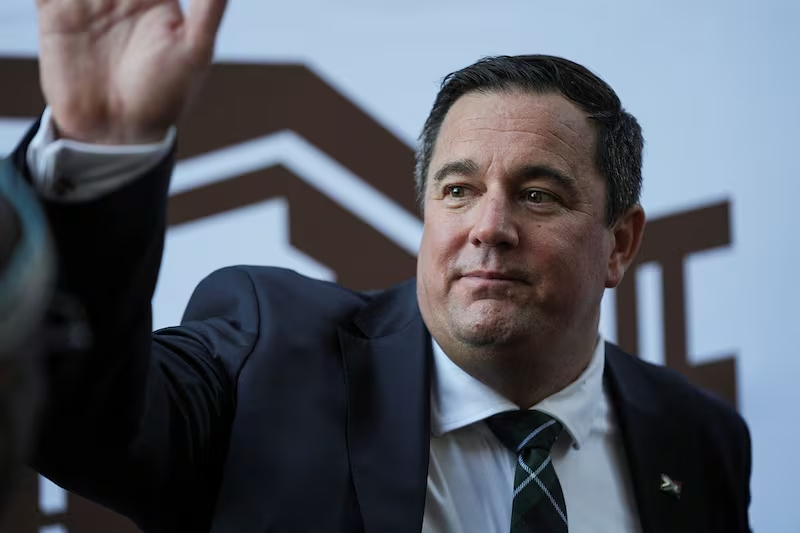
John Steenhuisen confirms he will not seek re-election as DA leader in April 2026. Image Source: TimesLIVE
In a move that has sent shockwaves through the South African political landscape, John Steenhuisen officially announced today, February 4, 2026, that he will not seek re-election as the Federal Leader of the Democratic Alliance (DA).
Speaking from his home turf in eThekwini, Steenhuisen confirmed he will vacate the party’s top seat at the upcoming Federal Congress in April. The announcement marks the end of a six-year leadership term defined by the party’s historic transition from the “party of opposition” to a key player in the Government of National Unity (GNU).
“Mission Accomplished”: The Official Stance
Steenhuisen’s departure is being framed by his office as a strategic transition rather than a retreat. In a speech titled “Moonshot Mission Accomplished,” he argued that he has delivered on the core promises made when he took over the party in 2019.
-
The GNU Achievement: Steenhuisen highlighted the DA’s entry into national government as his greatest legacy.
-
Focus on Agriculture: He intends to serve out the remainder of his term as Minister of Agriculture, citing the need to focus on critical issues like the current foot-and-mouth disease outbreak and expanding agricultural export markets.
-
Economic Stability: He pointed to the 2026 credit rating upgrade and South Africa’s removal from the FATF grey list as evidence that the “DA effect” in national government is working.
The “Sobering” Reality: Internal Pressures and Controversy
Despite the triumphant tone of his official speech, insiders suggest a more turbulent exit. Analysts point to a “perfect storm” of internal and external factors that made his third-term bid untenable:
1. The Dion George Fallout
The recent resignation of former Environment Minister Dion George—who accused Steenhuisen of undermining internal democracy and becoming “too cozy” with the ANC—reportedly fractured the federal caucus.
2. The “Zille Factor”
Reports from the Mail & Guardian suggest Steenhuisen lost the critical support of Federal Council Chair Helen Zille. Without the backing of the party’s most powerful strategist, his path to re-election was effectively blocked.
3. Foot-and-Mouth Crisis
In his ministerial capacity, Steenhuisen has faced immense pressure from the farming community—a traditional DA stronghold—over the handling of livestock disease outbreaks that have spiked local meat prices.
The Race for Succession: Who’s Next?
With Steenhuisen stepping aside, the race to lead the DA into the 2026 Local Government Elections is wide open.
-
The Frontrunner: Geordin Hill-Lewis. The Cape Town Mayor is widely viewed as the favorite to take over. At 39, he represents the “technocratic” success of the DA’s governance in the Western Cape and has already indicated he would consider running if Steenhuisen stepped down.
-
The “Cabinet” Contenders: Minister of Communications Solly Malatsi and Basic Education Minister Siviwe Gwarube are also being discussed as potential candidates who could bridge the gap between the party’s traditional base and a younger, more diverse electorate.
“The DA is at a crossroads. We need a leader who can manage the delicate balance of being in government with the ANC while still maintaining our identity as a distinct political force.” — Senior DA Insider.
DA Leadership Timeline: 2026
| Date | Milestone |
| Feb 4, 2026 | Steenhuisen officially withdraws from the leadership race. |
| Feb 24, 2026 | Official nominations for DA Federal Leader open. |
| April 2026 | Federal Congress: New leadership to be elected. |
| Late 2026 | Local Government Elections (The first big test for the new leader). |
About The Author