Shot Twice in the Head During Her Morning Commute – Kenya’s DCI Arrests Two Suspects in the Targeted Assassination of Mental Health Pioneer Dr Victoria Mutiso
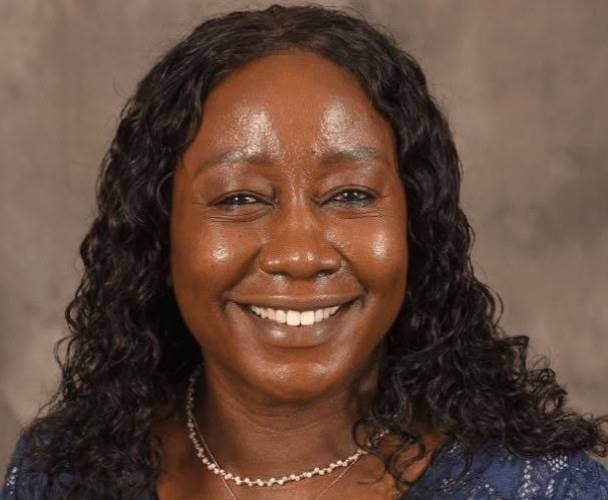
By Mpho Tumelo Modise | Editor-in-Chief, EZA News
She dedicated her career to understanding and healing the African mind. She was killed in a carefully coordinated ambush that bore none of the hallmarks of opportunistic crime. The questions that now surround her death are as disturbing as the manner of it.
Nairobi, Kenya – Two suspects are in custody following the murder of Dr Victoria Mutiso, a renowned mental health researcher and director at the Africa Institute of Mental and Brain Health – known as AFRIMEB – who was shot dead on Wednesday morning in what the Directorate of Criminal Investigations has confirmed detectives suspect was a deliberately planned, targeted attack.
Dr Mutiso was travelling in an Uber vehicle during her morning commute through Nairobi’s Upper Hill area when the ambush was executed with a precision that has shaken both the Kenyan law enforcement community and the broader public health fraternity across the continent. She was pronounced dead on arrival at the Kenyatta National Hospital Emergency Centre.
A life built in service to a neglected crisis
Before understanding the manner of her death, it is necessary to understand the magnitude of the loss.
Dr Victoria Mutiso was not simply a researcher. She was one of the continent’s foremost advocates for taking African mental health seriously – not as a peripheral concern of the global health establishment, but as a crisis demanding African-led solutions, African institutions, and African voices. Her role as director at AFRIMEB placed her at the helm of one of the continent’s dedicated research centres on mental and brain health – an institution working at the intersection of psychiatric science, community health, and policy advocacy in a region where mental health infrastructure remains chronically underfunded and systematically undervalued.
Mental illness in sub-Saharan Africa carries a treatment gap that mental health professionals have long described as catastrophic. The World Health Organization estimates that fewer than one in ten people with a mental health condition in low-income countries receive the care they need. In Kenya, as across the continent, the burden is borne disproportionately by families, communities, and underpaid frontline health workers – while the research and policy frameworks needed to change that reality depend entirely on people like Dr Mutiso: researchers with the institutional standing, the scientific credibility, and the personal commitment to insist that the gap must be closed.
Her death removes one of those people from a field that cannot afford to lose them.
The ambush: coordinated, deliberate, lethal
The forensic picture that has emerged from witness accounts and DCI statements points to a murder that required planning, surveillance, and execution by multiple actors – not a robbery, not a random act of violence.
At approximately 9 a.m. on Wednesday, Dr Mutiso’s Uber vehicle arrived at the junction of Mbagathi Link Road and Mawenzi Road in Upper Hill – a part of Nairobi well-known for its concentration of hospitals, embassies, and professional offices. A Toyota Prado was already parked at the junction when the Uber arrived and stopped alongside it. The positioning of the vehicle suggests prior knowledge of the route or the schedule.
Moments later, a motorcycle carrying three men approached. One of the assailants opened fire, shooting Dr Mutiso twice in the head at close range. The motorcycle fled immediately. The Toyota Prado sped away at the same moment – a detail that has led investigators to treat it as part of the operation rather than a coincidental presence.
The Uber driver, in an act of considerable presence of mind in an extreme moment, drove directly to the Kenyatta National Hospital Emergency Centre in an attempt to save her life. She was pronounced dead on arrival. Homicide detectives and forensic officers from the DCI subsequently cordoned off the Uber vehicle at the hospital. Ballistic experts recovered two spent cartridges from inside the car. The vehicle has since been detained as a key exhibit.
Investigators are also examining the mobile phones of both Dr Mutiso and the driver, seeking to reconstruct their movements and communications in the hours before the shooting – a standard step in targeted killing investigations where advance surveillance of the victim’s routine is a likely component of the crime.
Two in custody – but critical questions remain open
The DCI confirmed that two persons of interest were arrested following “multiple investigative leads” pursued through witness interviews, forensic analysis, and targeted operations. Searches were also conducted at premises linked to persons of interest, yielding exhibits now undergoing forensic analysis. The two suspects are in lawful custody and under interrogation.
The arrests, while significant, resolve none of the most consequential questions: who ordered this killing, why, and what – if anything – about Dr Mutiso’s work or her professional life made her a target. The DCI has not publicly stated a motive, and investigators at this stage appear to be building an evidential foundation before drawing any conclusions about the nature and purpose of the operation.
What can be said with confidence is that this was not opportunistic. The presence of a staged vehicle, a coordinated team on a motorcycle, and a getaway structure that deployed immediately after the shots were fired describes an operation that was planned. The involvement of at least three individuals on the motorcycle alone – to say nothing of whoever drove the Toyota Prado – suggests a network, not a lone actor.
A killing that must not be buried in the news cycle
Kenya’s homicide landscape is not simple, and not every high-profile killing yields answers quickly or completely. But Dr Mutiso’s murder carries a weight that extends beyond criminal proceedings. She was a public intellectual in one of Africa’s most important and underserved fields. Her institution – AFRIMEB – operates in a space where the relationship between research, policy, and community wellbeing is direct and measurable. The disruption caused by her death is not merely personal or institutional. It is sectoral.
The DCI’s confirmed arrests are a necessary first step. What follows – the quality of the investigation, the transparency of the prosecution, and the credibility of any motive that eventually emerges – will determine whether Kenya’s institutions can account for the loss of one of the continent’s clearest voices on mental health.
For now, the junction of Mbagathi Link Road and Mawenzi Road is where a career of service to the African mind came to a violent and premature end. The two suspects in custody must answer for what happened there. And someone – yet unidentified – must answer for why.
About The Author