Private Sector Accelerates Renewable Energy Investment as R200 Billion in Solar and Wind Projects Move Forward
By Sipho “The Investigator” Ndlovu | Hard News & Strategy Editor, EZA News
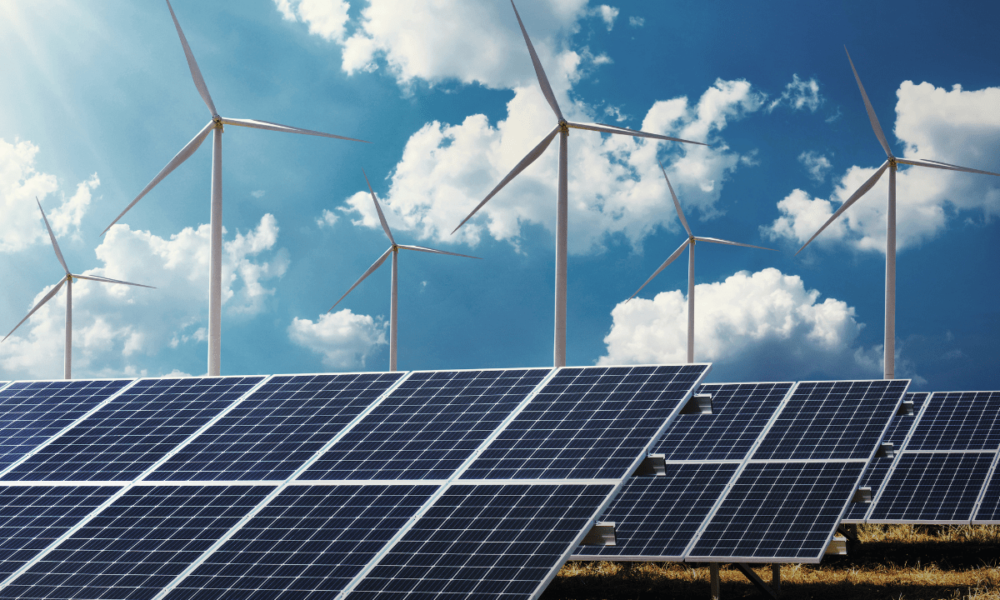
South Africa’s private sector has significantly accelerated its commitment to renewable energy, with major corporations and investment consortia confirming solar and wind projects totalling R200 billion now in active development phases. The scale of the commitment represents the most substantial private energy investment in the country’s history and signals a structural shift in how South Africa’s energy future is being built – from the bottom up, not the top down.
The acceleration is driven by several converging factors. Eskom’s ongoing capacity constraints, which have persisted despite load-shedding reductions, have given large industrial consumers and corporate entities the incentive they needed to move aggressively toward energy self-sufficiency. Regulatory changes that have allowed embedded generation projects above 100MW to proceed without ministerial approval – a significant policy shift – removed a key bottleneck that had slowed private sector entry into the space for years.
The R200 billion figure encompasses projects across multiple provinces, with the Northern Cape, Eastern Cape, and Western Cape anchoring the solar and wind components respectively. Several projects are backed by coalitions of major South African corporations who have pooled resources to develop generation capacity that will serve their own industrial needs first and sell surplus into the grid under wheeling arrangements.
The Investment for the technology sector, by contrast, continues to grow at double-digit rates despite the broader economic slowdown. South Africa’s tech ecosystem – the most developed on the continent – is absorbing investment capital that cannot find adequate returns in more mature or more volatile sectors. The combination of growing domestic digital consumption, a deep pool of technical talent relative to regional peers, and established institutional infrastructure for financial transactions makes South Africa’s tech sector a compelling destination for patient capital.
The broader economic picture, however, remains sobering. The Reserve Bank’s revised 2026 growth forecast of 0.5% has not changed. Manufacturing faces persistent headwinds from weak demand and supply chain disruption. The agricultural sector continues to absorb the consequences of a severe drought that has prompted disaster declarations in several provinces.
Renewable energy investment will not resolve those structural challenges on its own. But it is one of the few clear positive signals in an otherwise constrained economic environment – and its accelerating momentum suggests that the private sector has made a decision about South Africa’s energy future that it is no longer waiting for the public sector to validate.
About The Author