US Shuts Durban Visa Operations from Today; UNHCR Calls on South Africa to Honour Refugee Commitments
By Mpho Tumelo Modise | Editor-in-Chief, EZA News
Two developments at the intersection of South Africa’s international obligations and its relationship with displaced and mobile populations crystallised this week with particular sharpness.
From 1 August 2026 – effective today – routine United States visa services in Durban have been transferred to regional processing hubs elsewhere in Africa, as part of a broader restructuring of US visa operations across the continent. For KwaZulu-Natal residents seeking US visas, the immediate practical consequence is that applications requiring in-person appointments must now be directed to processing centres outside the province. The shift reflects a wider pattern of US diplomatic service consolidation that has drawn criticism from communities in affected cities across multiple African countries, who bear the cost – financial and logistical – of travelling to alternative processing centres that Washington has determined are more efficient for its operational purposes.
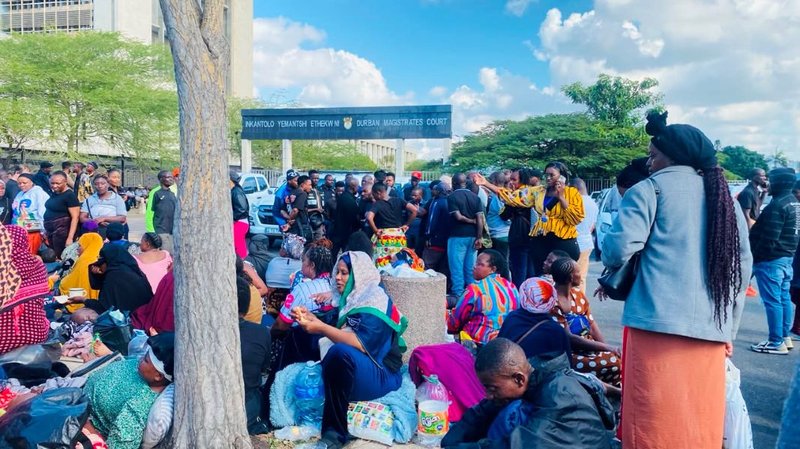
The timing of the change coincides with a separate and more urgent call from the United Nations Refugee Agency, which has formally urged South Africa to renew its commitment to refugee protection and support for displaced families facing conditions of acute vulnerability. The UNHCR’s statement was prompted by what the agency describes as a pattern of increasing difficulty faced by refugees navigating South Africa’s asylum system – a system that has been under documented strain for years, with processing backlogs that leave applicants in legal limbo for extended periods, and with enforcement actions that have periodically targeted refugee communities in ways that the UNHCR characterises as inconsistent with South Africa’s obligations under international refugee law.
South Africa’s constitutional commitment to human dignity and the rights of non-citizens is unambiguous in its text. The gap between that textual commitment and the lived experience of refugees navigating the Department of Home Affairs, the South African Police Service’s approach to documentation enforcement, and the informal hostility that refugee communities face in urban settlements, remains one of the persistent measures of the distance between South Africa’s self-conception as a constitutional democracy and its operational reality. The UNHCR’s call is not a new one. The question is whether, this time, it produces a concrete government response rather than an acknowledgement and a deferral.
About The Author