Women’s Month: Activists Take Anti-Xenophobia Campaign Door-to-Door in Yeoville; Cape Town Disability Showcase Launches
By Mpho Tumelo Modise | Editor-in-Chief, EZA News
South Africa’s Women’s Month – August, anchored by the National Women’s Day public holiday on 9 August, which falls this year on a Sunday and will be observed on Monday 10 August – has opened against a backdrop of two community initiatives that deserve recognition precisely because they demonstrate what organised civil society can achieve at the level of direct human engagement.
In Yeoville, Johannesburg – a neighbourhood that has for decades been one of the most diverse and most contested spaces in the inner city, a place where the intersection of South African poverty, immigrant community settlement, and the periodic eruptions of xenophobic hostility have repeatedly produced tragedy – activists are conducting a door-to-door campaign explicitly designed to push back against the xenophobic sentiment that has been building in parts of the community. The methodology is deliberately local and human: going to doors, having conversations, building the kind of individual-to-individual relationship across community lines that abstract messaging campaigns cannot replicate. It is the right approach, and its scale is a reflection of what organised civil society can mobilise when the political moment demands it.
In the Western Cape, the Bold Beauty Project – an internationally recognised initiative celebrating women with disabilities – has launched its African debut with “As She Is,” a photographic exhibition featuring 17 women from across the Western Cape. Women with disabilities represent one of the most invisibilised intersections of marginalisation in South Africa: they carry the compounding disadvantages of gender inequality and the systemic exclusion that disability imposes in a society whose public infrastructure, employment practices, and cultural representations have not adequately accounted for the full range of human capability and experience. An exhibition that places their stories, their beauty, and their lives at the centre of a Women’s Month conversation is a contribution to the broader project of representation that has material consequences – it changes what South Africans see as possible and normal in ways that policy documents and statistics cannot accomplish alone.
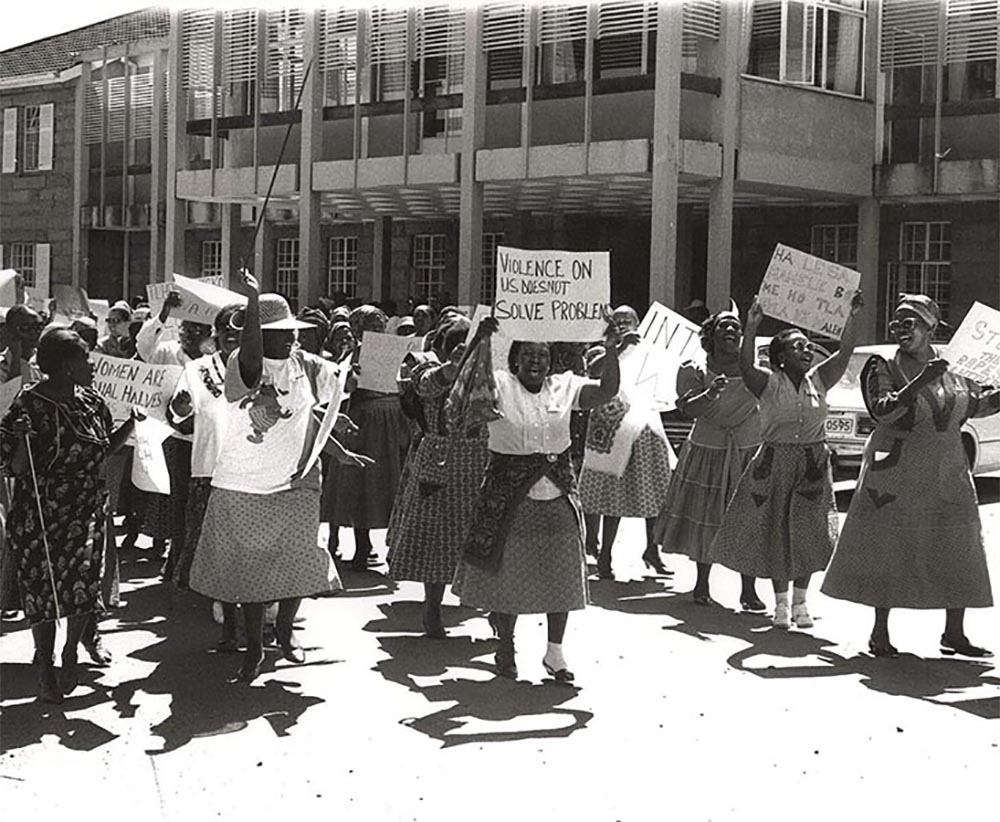
Women’s Day on 9 August commemorates the 1956 march on the Union Buildings by 20,000 women protesting the extension of pass laws to women. The courage of that march, and the political sophistication of its organisers, deserves more than ceremonial remembrance. It deserves the continuation of the work – in door-to-door campaigns against xenophobia, in photography studios where disabled women reclaim their visibility, and in the streets and courts and legislatures where the structural conditions that still constrain South African women’s lives are contested every day.
About The Author