Mbalula Delivers Blunt Warning: ANC Faces “Existential Crisis” With 77 Days to Local Elections
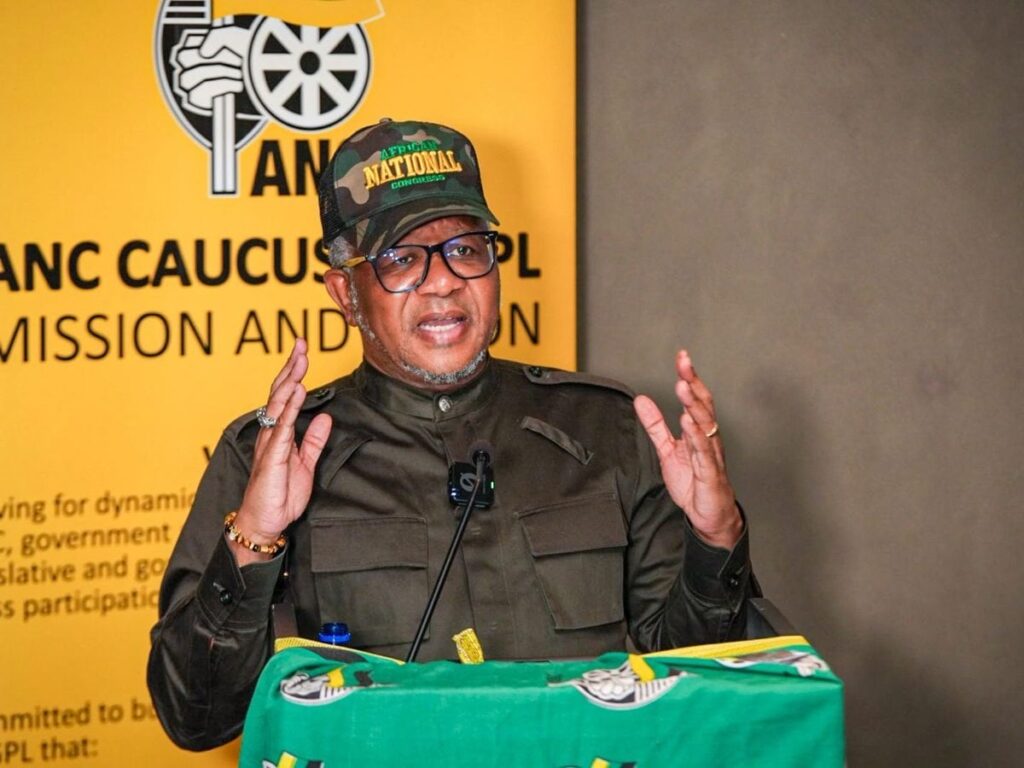
By Mpho Tumelo Modise | Editor-in-Chief, EZA News
ANC Secretary-General Fikile Mbalula has delivered the most candid public assessment of his party’s electoral condition yet, warning at a church gathering in Katlehong this week that the ANC confronts “an existential crisis” ahead of the 4 November 2026 local government elections – and that no amount of organisational machinery, liberation nostalgia, or coalition management can substitute for the fundamental work of re-earning the public’s trust.
“We go to the 2026 local government elections confronted by an existential crisis,” Mbalula told the gathering. “An existential crisis is not a bad week or a lost by-election.” To understand the weight of that statement, you need to understand what the ANC was a decade ago – a party that had never, in thirty years of democratic South Africa, fallen below 50% of the national vote. It governed alone, always, from 1994 until the 2024 election changed everything. In May 2024, for the first time in the post-apartheid era, South African voters denied the ANC an outright majority. The party was forced to construct a Government of National Unity with parties it had spent decades opposing – the Democratic Alliance chief among them. That was not a tactical retreat. It was a structural rupture, and Mbalula is now saying so in public with the kind of plainness that ANC leaders have historically avoided.
“We turned that outcome into a Government of National Unity with parties we had spent decades standing against, choosing this country’s stability over our own pride,” Mbalula said. He also delivered a message about the party’s relationship with voters that is, for a senior ANC leader, unusually blunt: the party can no longer expect support on the basis of what it did in 1994. The liberation dividend has been spent. What remains is a performance question – and on performance, the record across South Africa’s municipalities makes for uncomfortable reading. From Johannesburg’s collapsing water infrastructure and its 20%-plus of 2026 spent without water in established suburbs, to eThekwini’s budget scandals, to the Tshwane governance battles that ended in court – the local government tier has been the ANC’s most visible and most damaging failure ground.
The November 4 elections are now 77 days away. Local government elections in South Africa have historically functioned as a mid-term referendum on the quality of governance that citizens experience at the most intimate level – the water that comes out of a tap, the road that connects them to work, the refuse that is or is not collected on schedule. A party whose Secretary-General is publicly using the phrase “existential crisis” at a church gathering in Katlehong is a party that understands, at its leadership level, that those 77 days may not be enough to close the distance between what the organisation currently represents and what South African voters in November will demand. The question is not whether the crisis is real. Mbalula has answered that. The question is whether anything in the ANC’s remaining campaign period is capable of answering it.
About The Author