Rand Manipulation Explained
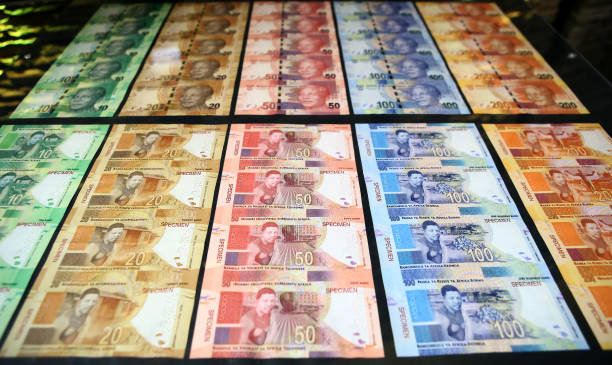
New South African banknotes at the value of ten, twenty, fifty, one hundred and two hundred South African Rand depicting former South African president Nelson Mandela are displayed at the The South African Reserve Bank (SARB) on July 13, 2018 in Pretoria, South Africa. - The South African Reserve Bank in celebration of the centenary of Mandela's birth launched its first commemorative banknote series. The larger than normal notes, namely the R10, R20, R50, R100 and R200, depict Mandela's historical journey from his birthplace to his last days. (Photo by Phill Magakoe / AFP) (Photo by PHILL MAGAKOE/AFP via Getty Images)
In a recent ruling, the Competition Commission fined Standard Chartered, a British multinational bank, R42 million for engaging in currency manipulation.
Image Source: Getty Images
Published by: Everything ZA News
20 November 2023
Rand manipulation refers to the practice of banks and other financial institutions artificially influencing the exchange rate of the South African rand against other currencies, primarily the US dollar. This can be done through a variety of methods, such as coordinated trading, placing large orders to move the market, or spreading false information.
Rand manipulation can have a significant impact on the South African economy. A weaker rand can make exports more competitive, but it can also make imports more expensive, which can lead to higher inflation. A stronger rand can make imports more affordable, but it can also make exports less competitive, which can lead to job losses.
In 2015, the South African Competition Commission launched an investigation into allegations that several banks had colluded to manipulate the rand. The investigation found that the banks had engaged in a cartel to fix the price of the rand against the dollar. The banks were fined a total of R4.4 billion (US$233 million) for their involvement in the cartel.
The rand manipulation scandal has had a significant impact on South Africa’s financial markets and the country’s economy. It has also damaged the reputation of the South African banking industry and raised concerns about the integrity of the country’s financial system.
Here are some of the potential consequences of rand manipulation:
- Impact on exporters and importers: A weaker rand can make exports more competitive, but it can also make imports more expensive. A stronger rand can make imports more affordable, but it can also make exports less competitive.
- Impact on inflation: A weaker rand can lead to higher inflation, as the cost of imported goods increases. A stronger rand can help to keep inflation in check, but it can also slow economic growth.
- Impact on investment: Rand manipulation can create uncertainty for investors, which can make it more difficult for South African companies to raise capital.
- Impact on the financial system: Rand manipulation can damage the reputation of the South African banking industry and raise concerns about the integrity of the country’s financial system.
It is important to note that rand manipulation is a complex issue with a variety of potential consequences. The specific impact of rand manipulation will depend on a number of factors, including the extent of the manipulation, the reaction of the markets, and the response of the South African government.
About The Author