Solar Storm Dazzles Southern Africa: A Celestial Light Show and Techy Headaches

This stunning image captures the effects of the space storms on the skies above Gaansbai this past weekend. Image credit: News24, Photo by: Hugh-Daniel Grobler.
Published by: Rorisang Masenya
Over the past weekend, something pretty spectacular happened in the skies above Southern Africa. A massive solar storm, the strongest one in over two decades, unleashed a dazzling light show that lit up the night sky and left even seasoned skywatchers in awe.
What exactly is a solar storm?
Think of it like a cosmic sneeze from the sun. These storms happen when the sun burps out a huge amount of energy and charged particles, called a coronal mass ejection (CME). This CME hurtles through space and sometimes crashes into Earth’s magnetic field, causing a geomagnetic storm.
So, what does it look like?
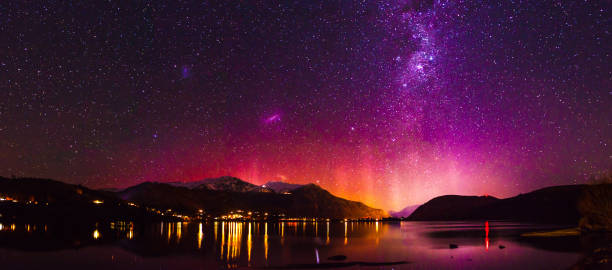
The most obvious sign of a solar storm is the appearance of the aurora borealis (northern lights) and aurora australis (southern lights). These are shimmering curtains of light that dance across the sky in a dazzling display of colours. In the case of this recent storm, the southern lights, usually confined to the polar regions, were visible as far north as Namibia and even parts of the Western Cape! Many South Africans were lucky enough to witness the sky glowing red and purple, a truly unforgettable sight.
What caused this particular storm?
This particular storm was rated a G5 on the geomagnetic storm scale, which goes from 1 (minor) to 5 (extreme). It was triggered by a particularly large and powerful CME that collided with Earth’s magnetic field. While scientists can predict these storms to some extent, the exact intensity and effects can be hard to pinpoint.
Any downsides to this celestial show?
While the light show was a treat for the eyes, it did cause some disruptions to technology. Solar storms can interfere with satellites, telecommunications, and GPS systems. The South African National Space Agency (SANSA), which monitors space weather, issued warnings to industries that could be affected. Luckily, no major damage was reported, but it’s a reminder of how reliant we are on technology and how vulnerable it can be to space weather events.
The future of space weather monitoring in Africa
SANSA, Africa’s only accredited space weather centre, plays a crucial role in monitoring and mitigating the risks of space weather. They operate a state-of-the-art facility that tracks solar activity and issues warnings to help protect vulnerable infrastructure.
The recent solar storm over Southern Africa was a rare and spectacular event, reminding us of the power and beauty of the sun. While it caused some minor technological hiccups, it also brought people together to marvel at the wonders of the cosmos. And who knows, with the sun’s activity ramping up, we might be treated to another light show in the not-too-distant future!
About The Author