Biden Applauds Ramaphosa’s New Government, Pledges Strong Partnership
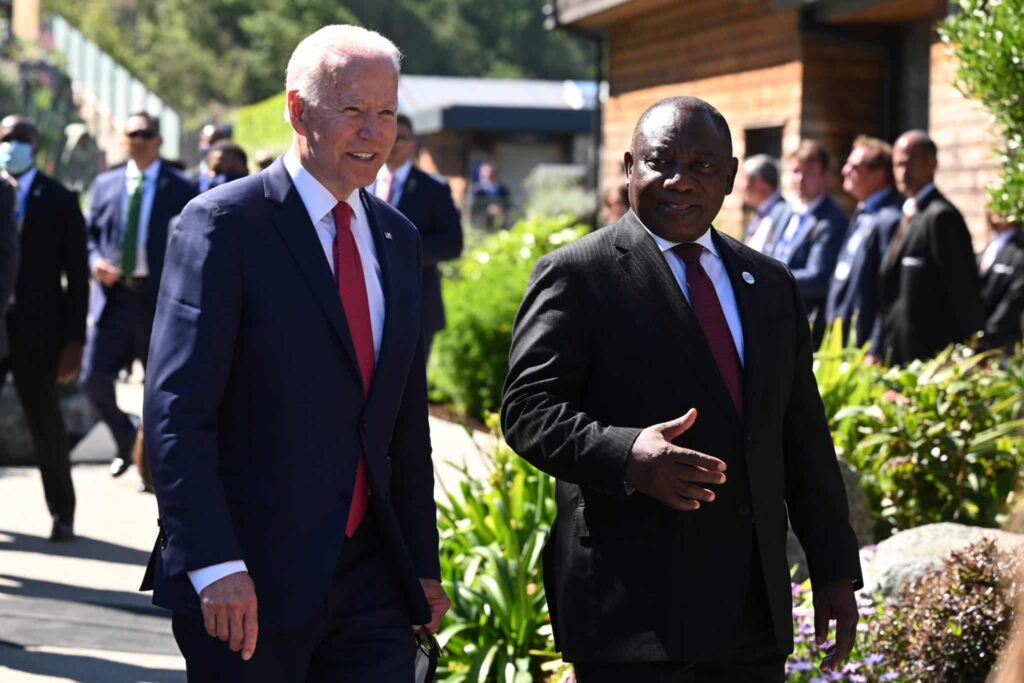
Biden’s Support for Ramaphosa’s New Government
Image Source: (Pool/Getty Images North America/AFP)
Published By Everything ZA News
President Joe Biden recently commended South African President Cyril Ramaphosa on the formation of a Government of National Unity (GNU) in South Africa, following the conclusion of the country’s highly contested national elections. The GNU, a coalition government comprised of multiple political parties, aims to foster unity, cooperation, and stability in a polarized political landscape.
In a show of support and solidarity, President Biden expressed his commitment to working closely with the seventh administration of South Africa under President Ramaphosa’s leadership. The United States applauds the peaceful democratic transition of power and the establishment of a GNU as a testament to South Africa’s commitment to democracy, equality, and inclusivity.
The relationship between the United States and South Africa is longstanding and rooted in shared values of democracy, human rights, and economic cooperation. President Biden’s praise for President Ramaphosa’s efforts to promote unity and inclusivity reflects a mutual commitment to advancing these principles both domestically and internationally.
As the two countries navigate a myriad of global challenges, including the ongoing COVID-19 pandemic, climate change, and economic recovery, the close partnership between the United States and South Africa is more important than ever. President Biden’s commitment to working closely with the seventh administration underscores the shared responsibility of both nations in addressing these pressing issues and promoting peace, prosperity, and justice for all.
Moving forward, the collaboration between the United States and South Africa under the leadership of Presidents Biden and Ramaphosa will undoubtedly strengthen the bonds of friendship and cooperation between the two nations. By working together, both countries can leverage their respective strengths and resources to tackle the complex challenges of the 21st century and build a more just and equitable world for future generations.
About The Author