South Africa’s G20 Presidency Focuses on Debt Restructuring and Climate Change

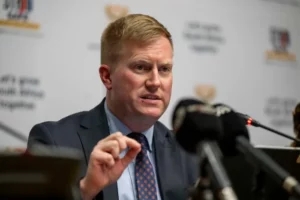
Image Source: Engineering News
Russian Foreign Minister Sergey Lavrov arrived in South Africa on Thursday to take part in a two-day G20 meeting. Key European diplomats are expected to reiterate their support for Ukraine, while U.S. Secretary of State Marco Rubio has decided not to attend.
Lavrov’s visit to Johannesburg coincided with significant U.S.-Russia bilateral discussions about the ongoing conflict in Ukraine, held just two days earlier. Notably, U.S.-European allies and Ukraine were excluded from these talks.
U.S. President Donald Trump complicated the Western stance by criticizing Ukrainian President Volodymyr Zelenskyy and falsely blaming Ukraine for the conflict, which will reach its third anniversary next week. Rubio chose to skip the G20 meeting due to rising tensions with South Africa over policies perceived as anti-American by the Trump administration.
Dana Brown, the Acting Ambassador to South Africa, will represent the U.S. The G20 includes 19 of the world’s largest economies and the European Union. Thursday’s participants included EU foreign policy chief Kaja Kallas and Chinese Foreign Minister Wang Yi.
As the current G20 president, South Africa aims to address urgent issues for the developing world, such as debt restructuring and climate change, in the meeting. The agenda also covers topics relevant to the global geopolitical landscape.
Britain, France, Germany, and the EU have pledged ongoing support for Ukraine and condemned Russia’s aggression, while expressing interest in any ceasefire talks. The G20 meeting in South Africa offers European nations a platform to present a united stance on the Russia-Ukraine conflict and the peace process, despite internal disagreements.
The G20’s goal is to bring together developed and developing nations to establish a framework for global economic stability and improve cooperation. However, the group often faces challenges in reaching substantial agreements due to the diverse interests of the U.S., Europe, Russia, and China.
In his opening remarks, South African President Cyril Ramaphosa highlighted the meeting as a chance for the G20 to engage in “serious dialogue” amidst global geopolitical tensions, warfare, climate change, pandemics, and food and energy insecurity. “There is a lack of consensus among major powers, including within the G20, on how to tackle these challenges,” Ramaphosa stated.
Senator Rubio’s decision to boycott this week’s meeting, along with his plan to miss the main G20 summit in South Africa in November, jeopardizes the overall effectiveness of the G20. Additionally, U.S. Treasury Secretary Scott Bessent announced he would not attend the upcoming G20 finance ministers’ meeting in South Africa due to prior commitments in Washington. This has been seen as another indicator of the Trump administration’s indifference to global institutions and international collaboration, favoring an “America First” approach.
Recently, the Trump administration issued an executive order halting all U.S. aid and assistance to South Africa, citing the country’s perceived anti-American stance. The order criticized South Africa for accusing U.S. ally Israel of genocide in Gaza during an ongoing case at the United Nations’ highest court, interpreting this as implicit support for the Palestinian militant group Hamas. The administration also expressed concerns about South Africa’s ties with Iran and the Communist Party of China.
Rubio dismissed South Africa’s G20 presidency theme of “solidarity, equality, and sustainability,” characterizing it as focused on DEI (diversity, equity, and inclusion) and climate change. He stated on X, “My responsibility is to promote America’s national interests, not squander taxpayer resources.”
South Africa has downplayed claims that Rubio’s absence is negatively affecting its G20 presidency. Just before the Johannesburg meeting, Foreign Minister Ronald Lamola commented that the U.S. is not entirely boycotting South Africa’s participation in the G20.
About The Author