JSE Soars Past 91,300 Points, Marking an 8% Rise Year-to-Date
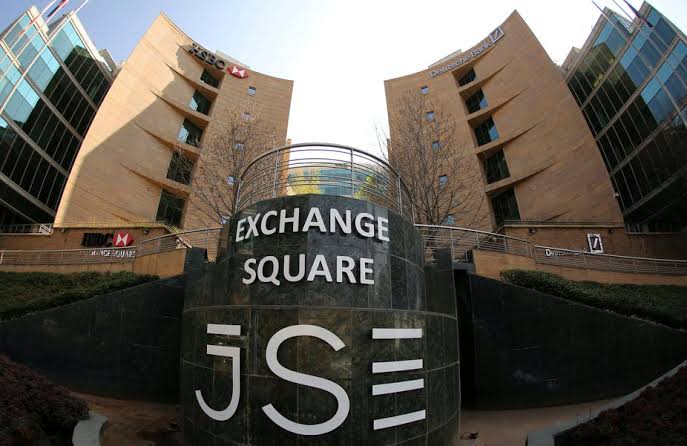
Image source: Business Post Nigeria
The Johannesburg Stock Exchange (JSE) marked a landmark achievement on Tuesday after the long weekend, as the All Share Index (ALSI) surged to new heights, surpassing the impressive 91,300-point mark. Although the day ended with a modest gain of 0.65%, this milestone reflects a remarkable rise of over 8% since the beginning of the year. The impressive upward trend comes at a time when market volatility has been influenced by global factors—notably, the tariff policies implemented by US President Donald Trump. In a further demonstration of momentum, the JSE experienced a notable surge on Wednesday morning, with the index leaping over 500 points and momentarily exceeding 91,800 points shortly before 10 a.m.
Investor confidence has been bolstered by improved outlooks in key sectors such as banking, retail, and real estate. Market participants are keenly anticipating an interest rate cut from the South African Reserve Bank (SARB) next month, following a month where March’s inflation rate was recorded at its lowest level in nearly five years. This expectation has not only enhanced sentiment in traditional sectors but also helped more companies listed on the JSE to finish Tuesday’s session on a positive note—even as gold stocks, which had been buoyed by record-high bullion prices, experienced some corrections. Technical analysts point to favourable signals in key indicators like the 50-day and 200-day moving averages, suggesting that while short-term fluctuations remain, the long-term trend retains its bullish character.
Global economic factors have played a significant role in reinforcing South Africa’s market performance. A steep decline in global oil prices—dropping to around $60 per barrel in April, a level last witnessed in 2021—has helped to ease inflationary pressures within the country. This drop in oil prices has a ripple effect, reducing operational costs and stabilizing consumer spending. Despite US President Trump’s move to halt the enforcement of substantially higher tariffs on most trading partners for 90 days (except for China), there lingers a possibility of renewed market turbulence should ongoing international trade discussions yield unexpected results. Analysts continue to monitor these developments, noting that global tariff dynamics can have both direct and indirect impacts on emerging markets like South Africa.
In terms of sector-specific volatility, global pharmaceutical stocks have seen dramatic swings. Aspen Pharmacare, a high-profile JSE-listed firm, experienced a staggering 30% plunge in its share price during a single trading session last week—eroding over R22 billion in market capitalization. Although the company managed a partial recovery—registering gains of 6% on Thursday and modest rises on subsequent trading days—the volatility underscores the broader uncertainties affecting pharmaceutical stocks internationally. Detailed tracking revealed that Aspen’s market capitalization dipped to about R49.9 billion mid-week before rebounding to slightly over R54.1 billion by Tuesday’s close, illustrating the resilience of investor sentiment in the face of short-term shocks.
On the banking front, Capitec Bank emerged as a standout performer after disclosing record financial results last week that significantly boosted its stock price. Its strong showing briefly elevated Capitec to the position of the JSE’s largest banking group by market capitalization, with shares trading above the R3,500 mark. On Tuesday, Capitec closed 0.91% higher at R3,484.13, pushing its market value to approximately R404.5 billion. In a similar vein, banking giant FirstRand regained its leading market position by posting a robust 2.42% increase, lifting its market capitalization to around R410.7 billion. Other major banks—Standard Bank, Nedbank, and Absa—also contributed to the positive momentum, recording share price increases of 1.9%, 2.03%, and 1.92%, respectively. The aggregated performance of these institutions drove the JSE’s Financials 15 index up by 1.61%, reflecting strengthened investor confidence in the financial sector.
The telecommunications and financial services sectors have not been left behind. Leading telecom firm Vodacom, along with sector peer Blue Label Telecoms (a major stakeholder in Cell C), showcased strong resilience with each reaching 52-week highs on Tuesday. Similarly, financial services companies OUTsurance and Momentum delivered noteworthy performances—with Vodacom’s stock climbing over 2%, OUTsurance increasing by 1.83%, and Momentum surging more than 3%. Their robust trading sessions are indicative of a broader market optimism that spans across multiple segments of the economy.
The broader trading session on Tuesday saw a preponderance of gainers over losers on the JSE. Small-cap property firm Acsion Limited, for instance, posted an impressive gain of nearly 20%. Within the JSE Top 40, major players like MTN and Clicks experienced rises of over 3% each. Additionally, other recognized names such as Sanlam and Shoprite recorded increases of 2.29% and 1.82%, respectively, reinforcing the overall strength in the market. The trading environment was also marked by an uptick in volume and liquidity, which industry experts attribute to both domestic optimism and a recovery in global markets following earlier tariff-related concerns.
Industry analyst Simon Brown from Just One Lap commented on the significance of these record highs, especially considering the long weekend and the overarching uncertainties brought about by VAT issues, global trade disputes, and a political climate defined by a government of national unity. He stated, “Our market continues to progress, supported by gold miners, while banks and industrials are also joining in.” His observations highlight that the market is benefiting from both structural strengths—such as diversified industrial contributions—and favourable technical trends, even as external pressures like shifting global tariff regimes continue to pose challenges.
The current performance of the JSE is particularly noteworthy when placed in a historical context. The index first breached the 90,000-point threshold on March 19, only to be briefly set back by Trump’s initial tariff announcement, which impacted global markets. However, as the US revised many of its tariff positions and markets began to absorb these changes, exchanges like the JSE rebounded, reaching these record-setting levels. This sequence of events not only underscores the responsiveness of the JSE to global trade policies but also its resilience as an economic bellwether for South Africa. Furthermore, renewed interest from both domestic and international investors indicates that the JSE is on course to maintain its upward trajectory in the coming months, as ongoing economic reforms and favourable market conditions continue to boost investor confidence.
About The Author