FIFA World Cup Trophy Tour: South African Celebration Meets Global Political Storm
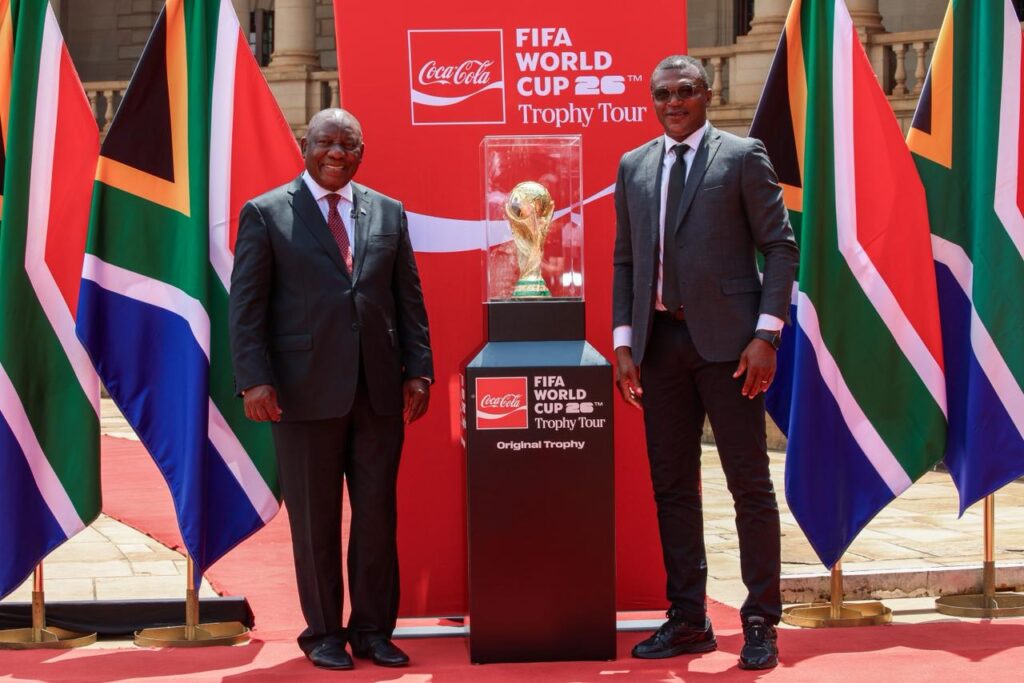
fans to boycott the 2026 World Cup due to recent political and safety controversies within the United States. Image Source: Newsnote
The most coveted prize in world sports has completed its historic journey through South Africa. On Sunday, February 1, 2026, the FIFA World Cup Trophy Tour reached its grand finale in Cape Town, drawing thousands of fans to the V&A Waterfront. However, while the atmosphere in South Africa was one of pure celebration, a “chilling shadow” is looming over the 2026 tournament due to escalating political and social controversies in the primary host nation: the United States.
A Hero’s Welcome: The Trophy in South Africa
After a 16-year hiatus from the world stage, South Africa is officially back. The trophy’s arrival served as a symbolic homecoming for a nation that hasn’t qualified for the tournament since hosting it in 2010.
-
Pretoria Kick-off: President Cyril Ramaphosa received the original gold trophy at the Union Buildings on January 30, joined by FIFA Legend Marcel Desailly.
-
Cape Town Finale: Legends like Aaron Mokoena and Siphiwe Tshabalala welcomed the cup at the V&A Waterfront, where fans queued for hours to catch a glimpse of the prize that Bafana Bafana will compete for in Group A this June.
-
National Unity: For many, the tour was a reminder of the “2010 spirit,” reigniting national pride ahead of the games in North America.
The “America Problem”: Boycotts and Border Fears
As the trophy leaves South African soil for Mexico and eventually the United States, the narrative is shifting from sports to geopolitics. The 2026 World Cup is increasingly being overshadowed by the domestic policies of President Donald Trump, leading to unprecedented calls for a global boycott.
1. The Visa and Immigration Crisis
The most immediate threat to the “Unfavorable Event” is the tightening of U.S. borders.
-
Targeted Restrictions: Despite FIFA’s assurances of inclusivity, fans from qualified nations—specifically Senegal, Ivory Coast, Iran, and Haiti—are facing severe visa delays and potential denials under the current administration’s immigration crackdowns.
-
The “Stay Away” Warning: Former FIFA President Sepp Blatter and anti-corruption expert Mark Pieth have publicly urged fans to boycott the U.S. leg of the tournament, warning that visitors risk aggressive treatment or summary removal by immigration officials upon arrival.
2. Civil Unrest and Human Rights
Human rights organizations, including Amnesty International, have identified several “red zones” that could disrupt the fan experience:
-
Mass Protests: Recent domestic unrest in the U.S. and the deployment of National Guard troops to major cities like Los Angeles have raised questions about fan safety and the freedom to assemble near stadiums.
-
Boycott Momentum: Social media campaigns, such as #BoycottFifaWorldCup, have already seen an estimated 20,000 ticket cancellations from fans citing the “Trump regime’s” policies on immigration and military intervention as a moral dealbreaker.
3. Economic and Ticket Anxiety
The “American dream” of attending a World Cup is becoming a financial nightmare for many. High inflation and skyrocketing ticket prices (some reaching over $5,000 for early rounds) have alienated the very “Global South” supporters who made the 2010 and 2022 tournaments so vibrant.
“We are witnessing a collision between a sport that markets itself as borderless and a host nation that is increasingly tightening its borders. This is no longer just a sporting event; it’s a litmus test for international law.” — Legal Analyst, Mark Pieth.
The Road Ahead
While FIFA President Gianni Infantino remains optimistic that “football will unite the world,” the 2026 tournament faces a fragmented reality. For South Africans, the joy of qualifying is now tempered by the logistical and moral complexity of traveling to a host nation in the midst of a political firestorm.
| Metric | Details |
| Bafana Bafana Group | Group A (South Africa, Mexico, South Korea, TBD) |
| Tournament Dates | June 11 – July 19, 2026 |
| Primary Controversy | U.S. Immigration Policy & Boycott Calls |
| Next Trophy Stop | Mexico (Starting Feb 26) |
About The Author