Zimbabwe Opposition Challenges Mnangagwa Presidential Term Extension in Court
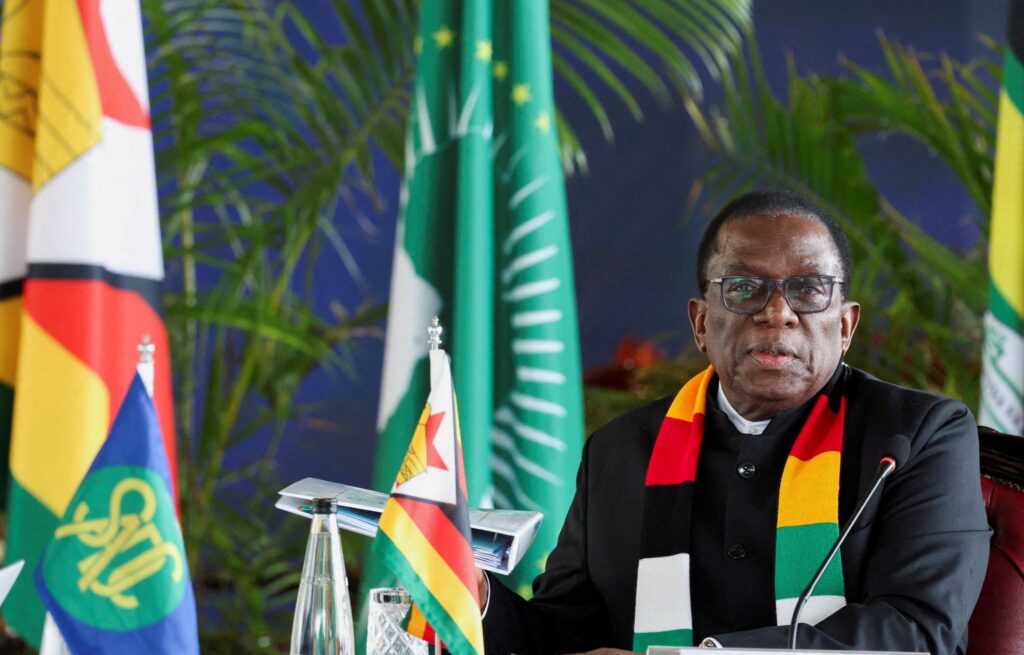
Image Source: Daily Sabah
By Mpho Tumelo Modise | EZA News
Zimbabwe’s opposition has launched a legal challenge against President Emmerson Mnangagwa’s bid to extend his hold on power beyond the constitutional term limits that have governed the country’s political framework since independence. The challenge, filed in the courts this week, targets constitutional amendments that would, if enacted, allow Mnangagwa to remain in office beyond the terms previously permitted – a development that critics have characterised as the most direct assault on constitutional democracy Zimbabwe has experienced since the removal of Robert Mugabe in 2017.
Mnangagwa came to power through an army-backed coup that ousted Mugabe after 37 years in office – a transition that was initially welcomed by many Zimbabweans as an opportunity for genuine political change. The subsequent elections of 2018 and 2023, both contested by the opposition as deeply flawed, kept Zanu-PF in power and Mnangagwa in the presidency. The proposed amendments, which also include giving parliament the power to nominate the president – ending direct election by public vote, a mechanism introduced in 1987 – represent a further consolidation of the ruling party’s structural advantages.
Supporters of the amendments argue they will bring political stability and continuity. Critics – and the legal challenge reflects their position – argue that no constitutional amendment that entrenches the power of the incumbent at the expense of competitive democracy can be described as stability. It is the engineering of permanence, and the distinction matters.
For South Africa, the developments in Zimbabwe carry direct relevance. The mass migration of Zimbabweans that has contributed so significantly to South Africa’s ongoing and alleged xenophobia crisis is, at its root, a product of political and economic failure in Harare. An entrenched Mnangagwa government with diminished accountability is unlikely to create the conditions – jobs, rule of law, economic recovery – that would reduce the pressure on Zimbabweans to seek survival elsewhere. The legal challenge deserves support from the region, and from the African Union, as a matter of continental democratic principle.
About The Author