Africa’s Critical Minerals Moment: The Continent Positions for a High-Stakes Geopolitical Negotiation
By Mpho Tumelo Modise | Editor-in-Chief, EZA News
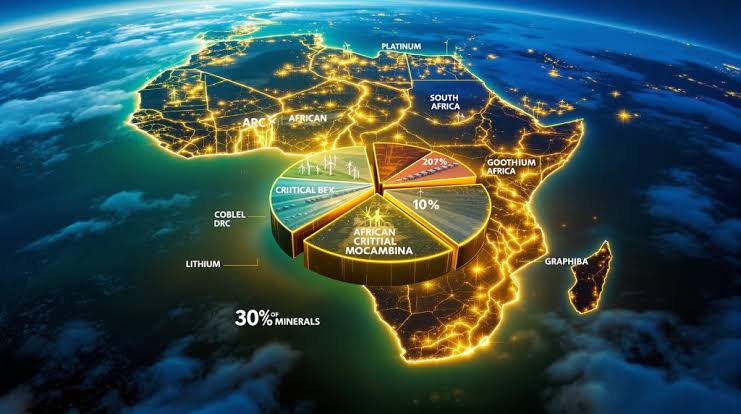
The global scramble for critical minerals – the lithium, cobalt, manganese, platinum group metals, and rare earths that underpin battery technology, electric vehicles, renewable energy infrastructure, and advanced defence manufacturing – has placed African nations at the centre of one of the defining geopolitical competitions of the decade.
The question the continent is now confronting, with growing urgency, is whether it will negotiate from the strength its resource endowment implies, or whether familiar patterns of dependency and extraction will reassert themselves under new vocabulary.
The mineralogical facts are stark. Africa holds a significant proportion of the world’s reserves of several minerals classified as strategically critical by the European Union, the United States, and China – each of which is pursuing its own supply chain security strategy with increasing intensity. Democratic Republic of Congo, Zambia, Zimbabwe, South Africa, and Namibia, among others, sit atop deposits that the energy transition will require at scale.
The political challenge is converting geological endowment into durable developmental benefit. This requires, at minimum, regulatory frameworks that capture meaningful revenue from extraction; industrial policy that moves value addition – processing, refining, manufacturing – onto the continent rather than exporting raw materials for processing elsewhere; and governance institutions robust enough to resist the combination of corporate pressure and corruption that has historically diluted the returns from Africa’s resource wealth.
South Africa’s position in this landscape is significant. The country’s platinum group metal reserves – the largest in the world – are already at the centre of a global demand shift as hydrogen fuel cell technology matures. How the South African government, and the broader Southern African Development Community, positions its minerals diplomacy in the coming years will have direct implications for whether the energy transition generates a new cycle of African prosperity or a new cycle of African extraction.
The window is open. Whether it stays open depends on decisions being made now.
About The Author