MK Party Launches Manifesto As Supporters Recall Safer Times Under Zuma
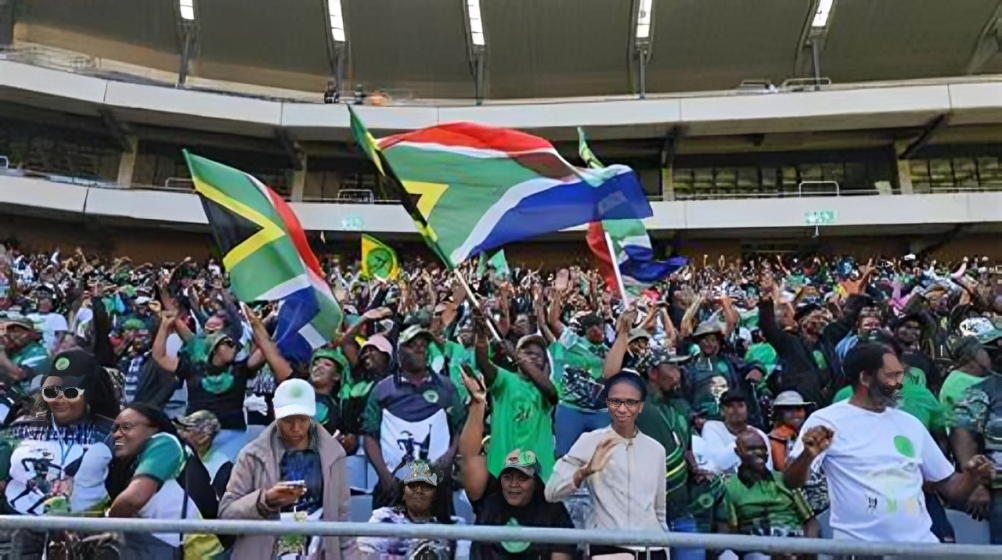
Image Source: Members of the uMkhonto weSizwe Party fill the lower stands of Soweto’s Orlando Stadium on Saturday. (Amanda Khoza/News24)
Published by Everything ZA News
JOHANNESBURG — In the heart of Soweto at Orlando Stadium on Saturday, the Umkhonto weSizwe (MK) party launched its election manifesto, promising increased funding for police and a referendum on the death penalty to combat rising crime rates. Among the attendees, many women voiced a nostalgic preference for the tenure of former President Jacob Zuma, citing a perceived decline in safety since his resignation in 2018.
The MK party’s manifesto reflects growing concerns about public safety, pledging robust measures to address crime. Supporters argue that these measures are urgently needed, as police statistics indicate a disturbing rise in murder, reported sexual offences, and rape over the past few years.
Lerato Motsepe from Emalahleni expressed her disillusionment with the current government’s handling of gender-based violence (GBV). “Since the current leadership came into power, GBV cases don’t get solved while women continue to get abused and children killed daily,” Motsepe lamented. Her sentiments resonate with many South African women who feel increasingly vulnerable.
Gender-Based Violence a Key Concern for Women Voters
Phindile Ntobe from eThekwini shared similar sentiments, reflecting on what she perceives as a safer past under Zuma’s administration. “When Nxamalala [Zuma’s clan name] was in charge, there is a lot I can count that was better. The level of crime was not as high as it is now, and do you know why? A lot of people were able to go to work and put food on the table,” Ntobe stated.
The rise in crime statistics since Zuma’s resignation has fueled a narrative among some supporters that his presidency provided greater stability and security. This perspective is particularly potent among those who have experienced the brunt of crime and feel neglected by the current leadership.
As the MK party seeks to capitalize on these sentiments, their manifesto’s promises of increased police funding and a potential death penalty referendum aim to present a tough-on-crime stance that resonates with voters longing for a return to perceived safety.
The upcoming elections will test whether these promises and the nostalgic appeal of Zuma’s era can translate into votes for the MK party. Meanwhile, the growing discontent among women like Motsepe and Ntobe highlights a critical issue for the nation’s leaders: the urgent need to address the escalating crime rates and restore a sense of security for all South Africans.
About The Author