
Post-Coup Gabon: Can Elections Restore Civilian Power?
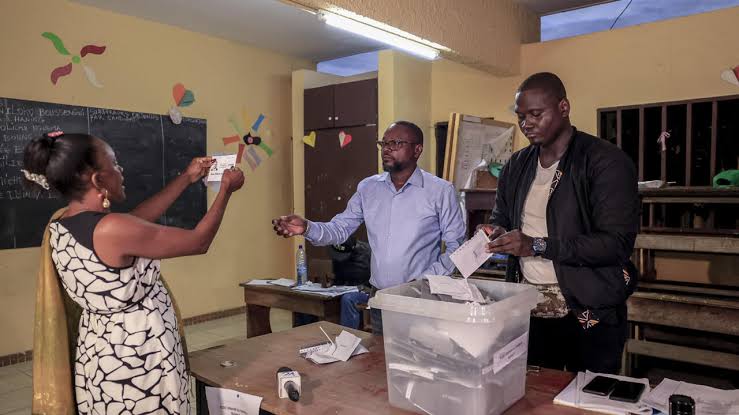
Image source: France 24
Voting in oil-rich Gabon largely finished on Saturday during a presidential election that the military leaders of the country hoped would establish their legitimacy. This is the first election since a military coup occurred in 2023, which ended a political legacy lasting over five decades. Analysts predict a substantial win for the interim president who orchestrated the coup. While polls were meant to close at 6 p.m. local time, there has been no official update from the authorities. Initial results were anticipated overnight or by Sunday.
About 920,000 voters, including more than 28,000 residing abroad, were registered at over 3,000 polling locations. Despite its significant oil resources, a third of the nation’s 2.3 million citizens live in poverty.
The interim president, General Brice Clotaire Oligui Nguema, 50, who previously led the republican guard, took over from President Ali Bongo Ondimba nearly two years ago. He aims to consolidate his power for a term lasting seven years. After voting in Libreville, the capital, Oligui Nguema expressed, “I feel pride and joy. I see so much enthusiasm from the Gabonese people gathered here who want to turn the page and embrace the new Republic.” He characterized the election as being “transparent” and “peaceful.”
Bongo was placed under house arrest following the coup but was released a week later due to health issues. His wife and son were detained and charged with corruption and misappropriation of public funds, while Bongo himself has faced no charges.
Post-coup, Oligui Nguema vowed to “restore power to civilians” through “credible elections.” However, he declared himself both interim president and a candidate after parliament approved a new and contentious electoral code that permits military personnel to run for office. He has positioned himself as a unifying leader who aims to bring hope to Gabonese citizens, using the campaign slogan “We Build Together.”
The new constitution, which was passed in a November referendum, establishes the presidential term at seven years, renewable once, replacing the previous unlimited five-year term. It also prevents family members from succeeding as president and eliminates the role of prime minister.
There are eight candidates in the presidential contest, but Oligui Nguema’s principal opponent is Bongo’s former Prime Minister, Alain Claude Bilie-By-Nze. In a recent interview with The Associated Press, he promised to create a “break with the old system and new independence—political, diplomatic, and economic independence.”
In a region where France is losing traditional allies in its former colonies, Gabon is notable as one of the few places where this partnership remains strong. The country still hosts over 300 French troops, making it one of only two African nations that retain a French military presence. While Oligui Nguema has not suggested any plans to terminate this military presence, Bilie-By-Nze stated, “No subject is off-limits” regarding the potential for renegotiating relations between Gabon and France.
Bilie-By-Nze has also raised doubts concerning the election’s fairness and transparency, claiming, “Everything has been done to lock down the vote.” Nevertheless, earlier this week, spokesman Laurence Ndong for Oligui Nguema countered these allegations, asserting, “For the first time, Gabon will have a free and transparent election.” Bilie-By-Nze cast his vote on Saturday in his hometown of Makokou located in the northern part of the country. He voiced concerns that unused voting cards could be used for potential electoral malpractice.
Voters queued early on Saturday in Libreville, and the election unfolded without any disturbances. Jonas Obiang, who was waiting to cast his ballot in the working-class area of Damas, mentioned he would support Bilie-By-Nze because he views the 2023 coup as a continuation of previous wrongdoing.
“General Oligui Nguema is governing the country with the same individuals who have exploited it—former members of the Bongo system. I will not endorse him,” he said.
Antoine Nkili, a 27-year-old unemployed individual with a master’s degree in law, shared similar views.
“The decision is personal, but I believe the military has failed. They promised to reform institutions, but instead, they’ve enriched themselves.”
On the other hand, Jean Bie, 57, who works in construction, felt that military rule has been advantageous to the people.
“In 19 months, General Oligui Nguema has completed several projects that were anticipated by the former regime. I’m casting my vote for him, hoping he will achieve even more in the next seven years,” he commented.
About The Author


