South Africa’s Police Minister Suspended Amid Explosive Syndicate Claims: A Nation Holds Its Breath
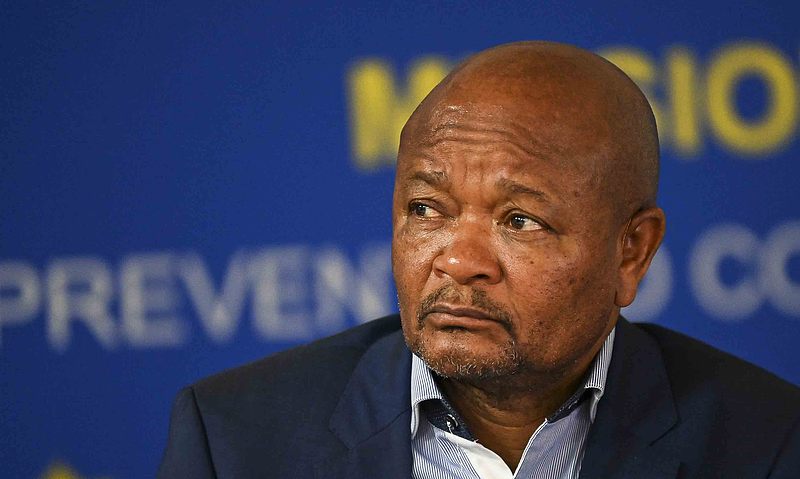
(Image Source: africa.cgtn)
Johannesburg, South Africa – July 18, 2025 – South Africa finds itself at a critical juncture in its fight against corruption, as President Cyril Ramaphosa has taken the drastic step of suspending the Police Minister, Senzo Mchunu, and initiating a high-level judicial commission of inquiry. This seismic development follows bombshell allegations by a top police official in KwaZulu-Natal (KZN), Lieutenant-General Nhlanhla Mkhwanazi, who claims the minister is embroiled in a sophisticated web of criminal syndicates.
The allegations, which surfaced in a dramatic press conference by Mkhwanazi on July 6th, have sent shockwaves through the nation, sparking intense debate and calls for decisive action. Mkhwanazi, the Provincial Commissioner of KZN, boldly accused Minister Mchunu and other senior officials, including Deputy National Commissioner Shadrack Sibiya, of interfering with sensitive investigations and colluding with criminal elements, including drug cartels and individuals linked to political killings.
The heart of Mkhwanazi’s claims centres on the alleged disbandment of a crucial task team specifically established to investigate politically motivated killings in KZN. This unit, according to Mkhwanazi, had uncovered unsettling links between politicians, law enforcement, prosecutors, the judiciary, and powerful criminal syndicates. He asserted that case files were removed from the unit on the minister’s and Sibiya’s instructions, without the authorization of their superior, National Police Commissioner General Fannie Masemola. Furthermore, Mkhwanazi alleged that Mchunu received financial support for his “political endeavors” from a businessman facing corruption allegations, a claim the Minister has vehemently denied.
In response to the escalating crisis and widespread public concern, President Ramaphosa on Sunday, July 13th, announced the immediate suspension of Minister Mchunu and the establishment of a judicial commission of inquiry. He emphasized the critical need to protect the integrity and credibility of the police and other law enforcement agencies in a country grappling with endemic corruption. Professor Firoz Cachalia, a respected law professor and chairperson of the National Anti-Corruption Advisory Council, has been appointed as the acting Police Minister.
The commission’s mandate is extensive, reaching far beyond the immediate accusations against Mchunu. It will delve into allegations of criminal infiltration across South Africa’s justice system, including the South African Police Service (SAPS), the National Prosecuting Authority (NPA), the State Security Agency, the judiciary, and various metropolitan police departments. Its investigations will encompass organized crime facilitation by law enforcement, manipulation of investigations, inducement into criminal actions by law enforcement leadership, and the intimidation of whistleblowers. The commission is expected to deliver interim reports within three and six months, with a final report anticipated within a year, offering recommendations for criminal prosecutions, disciplinary actions, and institutional reforms.
While President Ramaphosa’s decisive action has been met with a degree of relief, it has also drawn sharp criticism from opposition parties. Many, including the Democratic Alliance (DA), Economic Freedom Fighters (EFF), and the uMkhonto weSizwe (MK) Party, argue that suspension is insufficient and that Mchunu should have been fired outright. They express skepticism about the effectiveness of yet another commission of inquiry, citing a history of previous inquiries yielding limited tangible outcomes. The opposition fears that a prolonged investigation allows the accused to continue drawing a salary and potentially undermines the integrity of the process.
This unfolding saga underscores the deep-seated challenges South Africa faces in its battle against corruption and organized crime. The allegations, emanating from within the very ranks of law enforcement, threaten to further erode public trust in institutions vital for upholding the rule of law. As the judicial commission embarks on its arduous task, the nation watches intently, hoping that this inquiry will finally uncover the truth and pave the way for true accountability and a stronger, more transparent criminal justice system.
About The Author