Inside the Operation That Held the Line on June 30
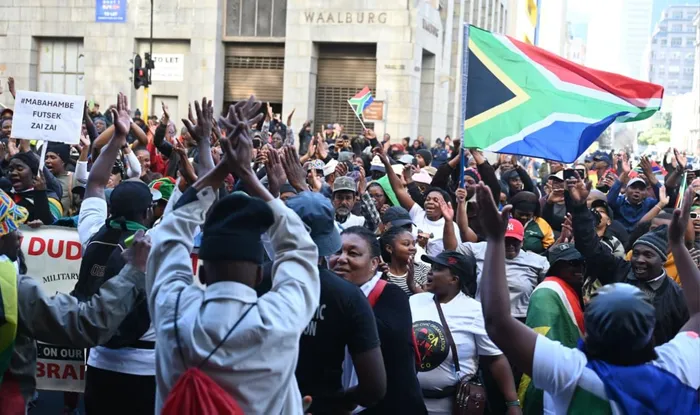
Image Source:
By Zola Mkhize | Editor-in-Chief | Everything ZA Travel News
South Africa’s most expansive security deployment in years kept the June 30 anti-migrant marches from tipping into nationwide violence – but the cost, in every sense, is still being counted.
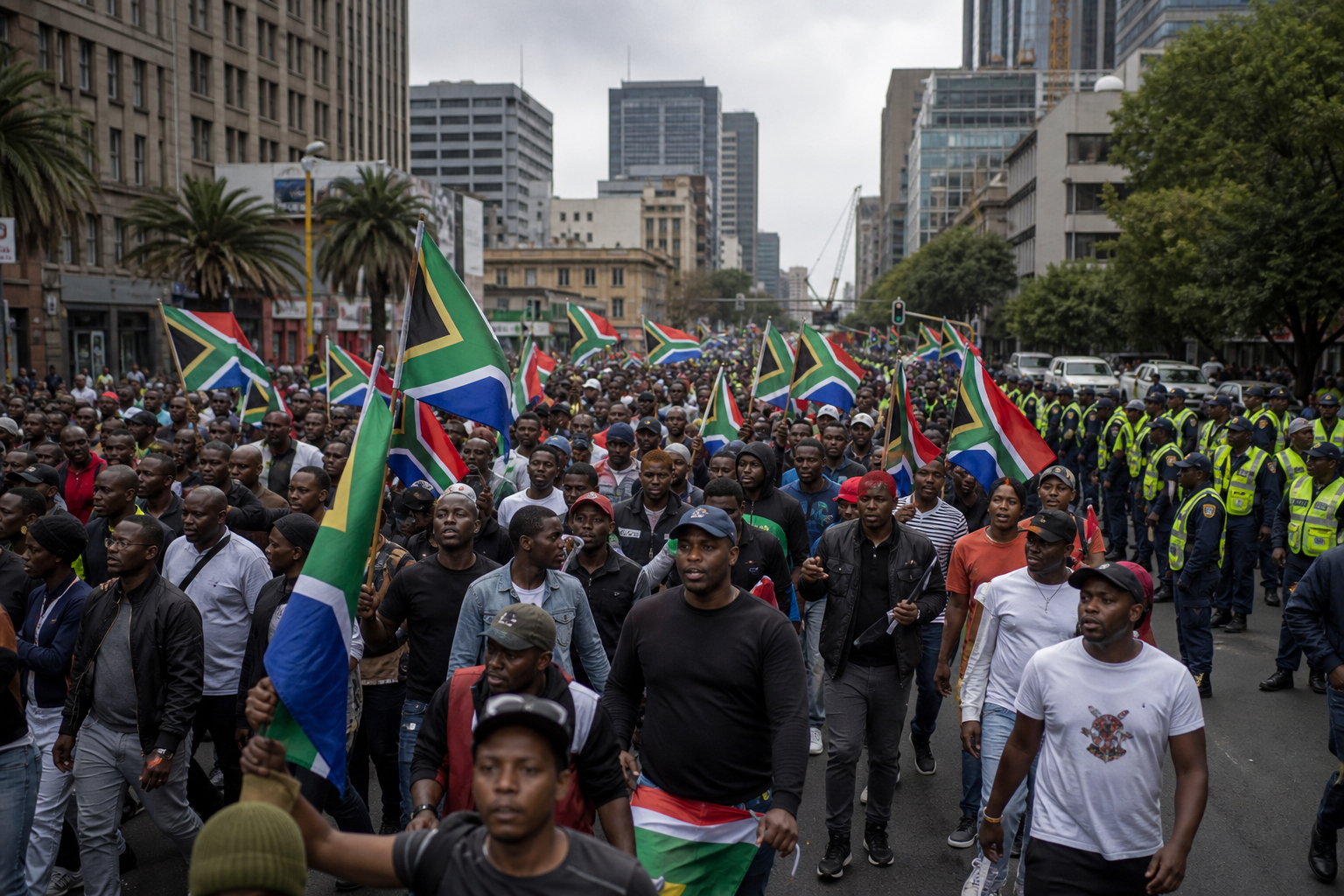
On the morning of Tuesday, 30 June 2026, South Africa woke to a country bracing for the worst. Shops shuttered in Durban, Johannesburg, and Pretoria. Transit camps housing thousands of Malawian, Zimbabwean, and Nigerian nationals awaiting repatriation sat tense and quiet in the pre-dawn. Police helicopters circled over Hillbrow. And across at least 130 locations in nine provinces, marchers – some carrying traditional weapons, some carrying South African flags, some carrying both – began to move through streets that the government had spent weeks preparing to hold.
What followed was not what many had feared. By day’s end, 108 of the 120 registered marches had passed peacefully. Twelve had required law enforcement intervention. Over 900 people were arrested. The army was deployed on contingency in Johannesburg and Durban. And a security operation that analysts estimate cost upwards of R600 million had, in the most essential sense, worked.
But the story of June 30 is not simply the story of a day that didn’t become a massacre. It is the story of what it took to prevent one – and what it reveals about where South Africa stands.
How the Deadline Was Set
The June 30 “deadline” did not emerge from government policy. It was set – and amplified – by a loose coalition of anti-immigration groups: primarily March and March, Operation Dudula, and Progressive Forces, whose combined campaigns in April and May had already produced a wave of protests unprecedented in scope. According to the Armed Conflict Location & Event Data Project (ACLED), the June 2026 demonstrations – totalling at least 150 – exceeded the entire previous 12-month record for anti-illegal migrant-related demonstrations combined.
The groups issued flyers, widely circulated on social media, falsely claiming that undocumented foreign nationals had until June 30 to leave South Africa or face arrest, detention, and deportation. AFP Fact Check confirmed that no such government deadline existed. But the flyers worked. In the weeks before June 30, thousands of migrants – primarily from Zimbabwe, Malawi, Nigeria, and Ghana – made their way to embassies, consulates, and temporary repatriation centres. South African police reported that 25,000 had been repatriated before the marches even began. By the time protests were underway, migrants were still boarding buses at the Beitbridge border crossing and at a transit camp in Durban where white tents were being dismantled under a winter sky.
The Security Architecture
What the South African government deployed on June 30 was, by any measure, extraordinary.
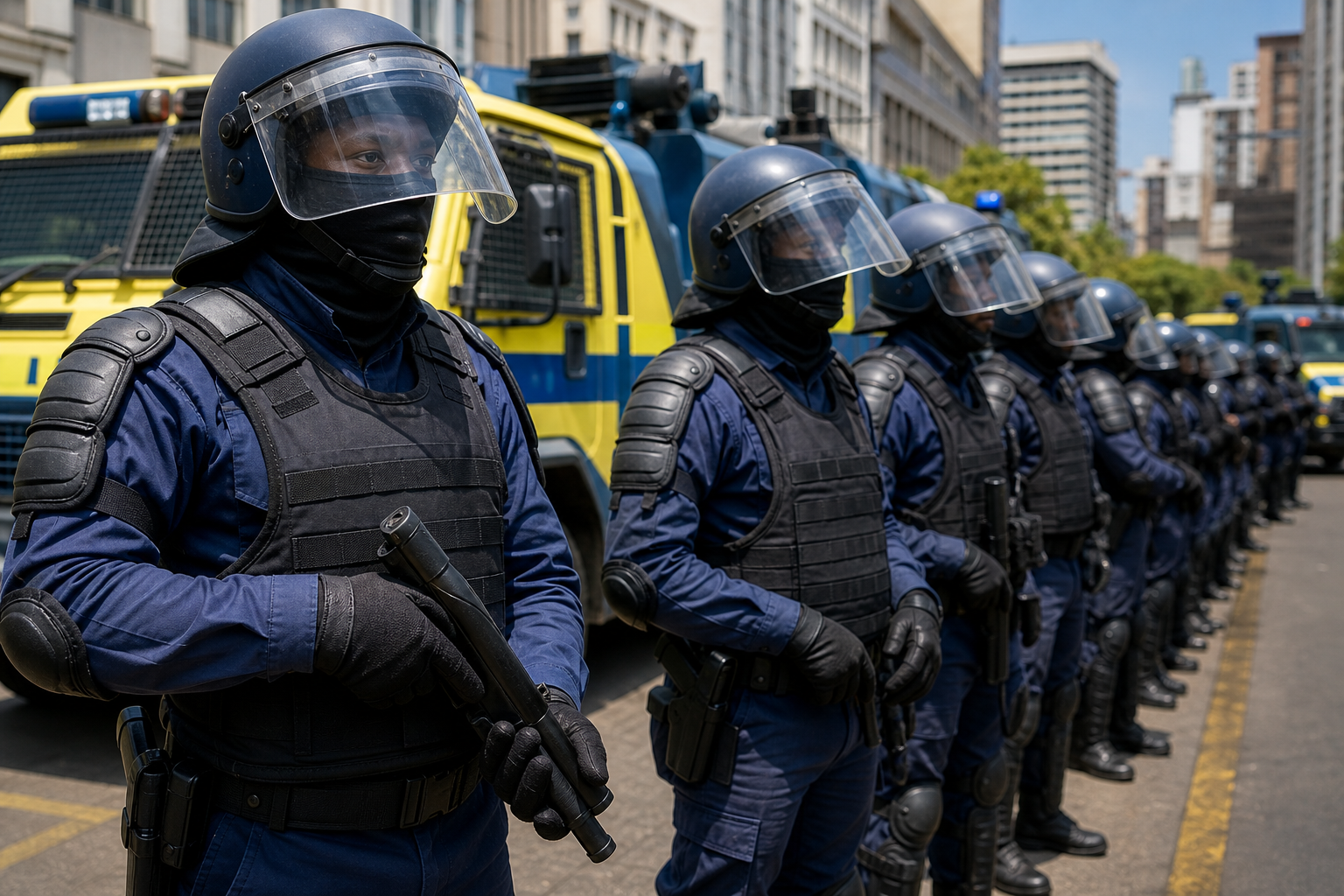
The South African Police Service coordinated with the South African National Defence Force, private security contractors – estimated by eNCA at nearly 500,000 officers working alongside police – and intelligence services in what Deputy National Police Commissioner Tebello Mosikili described at a post-march press conference as a proactive intervention. Police reinforcements were pre-positioned overnight in five of South Africa’s nine provinces in anticipation of isolated post-march incidents.
Aerial support – helicopters – was confirmed over Johannesburg’s Hillbrow and Yeoville, both neighbourhoods with high migrant populations that have historically been targeted during previous waves of xenophobic violence. Soldiers were deployed to Hillbrow on contingency as the march moved through.
Police Minister Firoz Cachalia confirmed that the army deployment was preventive rather than responsive: “On a contingency basis,” as he phrased it, was the government’s way of saying that the machinery was ready to escalate if needed, but that the goal was to prevent escalation from ever being needed.
That calculus held – barely, in places.
Where It Held and Where It Didn’t
In Durban, the march was the largest, drawing gatherings of up to 15,000 people, including ethnic Zulu Amabutho (traditional regiments) who carried shields, whips, and sticks in defiance of a police instruction not to bring traditional weapons. Police ultimately chose not to confiscate them – seizing only a machete – a decision that analysts at ACLED noted introduced a “new dynamic” and “heightened tensions.” The march nonetheless remained largely peaceful in Durban, where protesters handed a memorandum of demands to government officials.
In Johannesburg, the picture was more fractured. In Hillbrow, three people were arrested after they opened fire on passing protesters, injuring two people – including a 17-year-old – with protesters retaliating by setting the suspects’ vehicle alight. In Yeoville, demonstrators threw bricks, breaking windows of homes suspected to house foreign nationals. In a Germiston neighbourhood east of Johannesburg, marchers went door to door, evicting residents they suspected of being undocumented and handing them to police to check their documentation.
In Soweto, five people were arrested for allegedly looting a foreign-owned shop. In KwaZulu-Natal, approximately ten more were arrested for similar incidents.
The pattern is consistent with what ACLED described as the “principal shift” of the June period: not a dramatic spike in intensity, but an unprecedented expansion of geography. In April and May, demonstrations were concentrated in fewer than 35 locations. By June 30, they had spread to at least 130 – reaching Limpopo, Mpumalanga, North West, and the Northern Cape for the first time.
The Human Cost Before a Single March Began
The security operation prevented escalation on the day. It did not prevent the fear that preceded it.
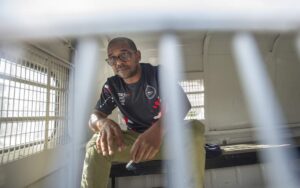
In Lagos, Emmanuella Akagbosun, 44, described the ransacking of the shop she shared with her sister. “We are not safe, so we had to leave,” she told the Associated Press after being repatriated from South Africa, where she had lived since 2017.
Fintan Opara, a Nigerian national repatriated after 18 years in South Africa, said most Nigerians no longer feel welcome in the country. Three groups of Nigerian migrants returned to Nigeria during June, with 632 people repatriated in total by the time the marches concluded.
Nelson Mbewe, a Malawian father who had gone to South Africa seeking employment, spoke to the BBC from the Durban transit camp as buses loaded for the trip north. “They say we are ‘makwerekwere,'” he said, using the xenophobic slur applied to African migrants. “It’s their country, so what can we do? That’s why we have accepted that we just have to go back home.”
In Mozambique, a group of 200 Malawians stranded in the southern town of Maxixe issued a distress appeal: “We have no money for transport, food and shelter as we attempt to proceed to Malawi. We request both the governments of Malawi and Mozambique to come to our aid.”
The Politics Behind the Marches
President Cyril Ramaphosa met with some protest leaders on the eve of June 30 in a last-minute attempt to secure commitments to peaceful demonstration. He has consistently walked a difficult line: acknowledging the reality of public concern about undocumented migration while pushing back firmly against the scapegoating and violence that has accompanied the campaign.
“Some foreign nationals who live in South Africa are here lawfully,” Ramaphosa wrote in his weekly newsletter published the morning of the marches. “They work, study, raise families, invest in our economy and contribute positively to our society. They too are entitled to the protection of our laws and our Constitution.”
Protest leader Ngizwe Mchunu told the Associated Press that he blamed illegal migration for the proliferation of illicit drugs and for informal shops not being owned by South Africans. “It is time for our government to put South Africa first,” he said.
Jacinta Ngobese-Zuma, leader of March and March, announced at the Durban march that protests would continue every Thursday for the next six months to pressure the government to “get rid of” undocumented migrants who remained.
Amnesty International South Africa countered that the targeting of foreign nationals distracts from the government’s responsibility to address the legacy of apartheid, persistent inequality, and failures in the asylum system – and warned that xenophobia risks fuelling further violence.
“Scapegoating foreign nationals,” said executive director Shenilla Mohamed, “does nothing to address the underlying challenges South Africans face.”
There are more than three million documented foreign nationals in South Africa, according to official figures. Police reported approximately 50,000 migrants had been arrested for immigration violations since January 2026 – before the June 30 marches added to that figure.
What Happens Next
The security operation that held June 30 together was extraordinary – and unsustainable as a permanent state. ACLED analysts noted that “maintaining this level of deployment, including police, intelligence coordination, and aerial support, may prove costly and difficult over the next six months.” The R600-million-plus estimated cost of a single day’s security apparatus underscores the point.
Protest leaders have been explicit: June 30 was not an ending. It was a demonstration. The marches will continue, weekly, and the pressure on the government to act on immigration policy will only intensify.
South Africa’s immigration challenge is real and complex. The country hosts one of the continent’s largest migrant populations in a context of over 30% unemployment, struggling public services, and deep inequality – inequalities that are themselves legacies of apartheid rather than consequences of migration, as rights groups consistently note. The question of how to address those inequalities without scapegoating the most vulnerable is one that June 30 did not answer. It only sharpened it.
What the operation that held June 30 together actually accomplished was the purchase of time. What happens in that time – in the negotiations, in the policy response, in the street-level tension that does not require a march date to ignite – is what will determine whether South Africa’s next chapter is written with dignity or with dread.
About The Author